For businesses in Monterey County, from Salinas to Monterey, remote work is here to stay. By 2026, how you manage your team's IT will be key to your success. Many local small businesses, however, are using temporary fixes that leave them open to major risks. As a local IT consultant, I want to give you direct advice to help your business grow safely.
This guide will show you the three biggest remote work IT mistakes to avoid in 2026 and give you simple steps to fix them. Our goal at Adaptive is to provide you with big-company IT solutions at a price that works for your local business. Being proactive is the best approach. Understanding the Top 7 Cybersecurity Risks of Remote Work can also help strengthen your security. Let’s make sure your hybrid work setup helps you succeed, keeping your team secure wherever they are.
1. Mistake #1: Treating Remote Work Like It's Still Temporary
The biggest mistake you can make in 2026 is acting like remote work is a short-term trend. It's not. It's the new normal for many businesses, including those in our local agriculture and hospitality industries. A recent study shows that 68% of small businesses still find it hard to secure remote access for their teams. If your IT setup is still a patchwork of temporary fixes, you're leaving your company's front door wide open to cyber threats.
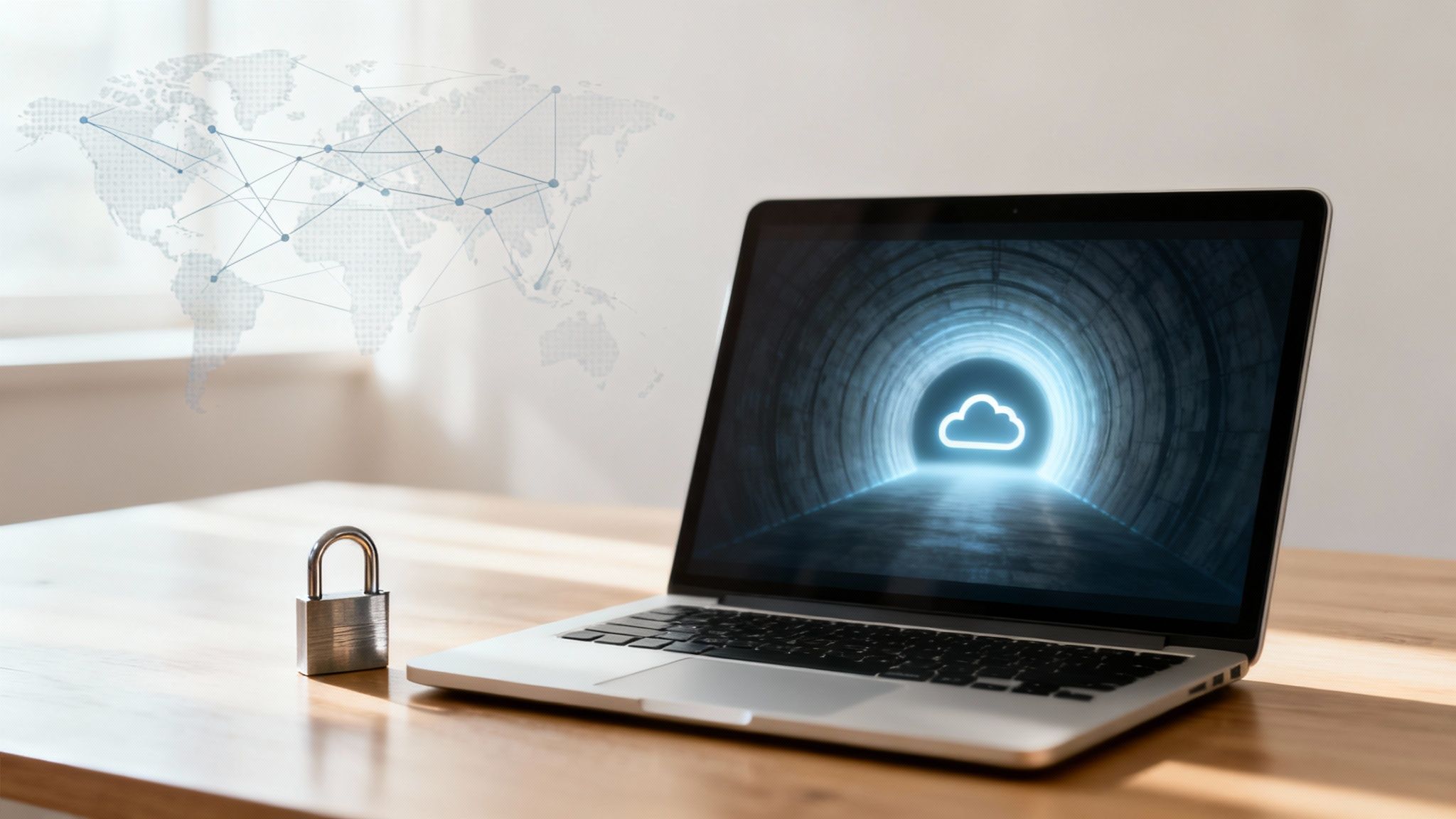
For a business in Monterey County, this isn't just an IT problem—it's a business problem. A weak remote setup can lead to data breaches, lost customer trust, and costly downtime. It's time to build a long-term IT plan that supports your team, whether they work from an office in Carmel, a home in Seaside, or on the road.
Why This Matters for Your Business
When your team works from different locations, your company’s security is only as strong as its weakest link. A single unsecured home network can become a gateway for hackers to access your entire business network. Treating remote IT as a permanent part of your operations helps you protect your data, improve team productivity, and stay competitive.
Key Insight: Building a solid IT foundation for remote work isn't just about security. It's about giving your team the tools they need to succeed from anywhere, with reliable support to back them up.
Actionable Steps for a Permanent Hybrid IT Strategy
You don't need a huge budget to build a secure and efficient remote work system. Here are some practical steps you can take:
- Implement a Secure VPN: A Virtual Private Network (VPN) creates a secure, encrypted "tunnel" for your employees to connect to your business network. This protects your data from being intercepted on public Wi-Fi.
- Protect Every Device (Endpoint Protection): Install security software on all computers and devices that access your company data. This helps block malware and other threats before they can cause damage.
- Provide Reliable IT Support: Your remote team needs help desk support that can solve their problems quickly, no matter where they are. Fast, friendly support keeps your team working and reduces downtime.
- Invest in Better Communication Tools: Tools like Voice over IP (VoIP) phone systems bring your team's communication—voice, video, and chat—into one simple platform. This helps everyone stay connected and productive.
Checklist for a Strong Remote Work Foundation
- Do all remote employees use a secure, business-grade VPN?
- Is endpoint protection software installed and updated on all devices?
- Does your team have access to fast, remote-friendly IT support?
- Are you using a modern communication system like VoIP to keep your team connected?
Building a strong remote IT strategy is a key step for any modern business. For a deeper look, you can learn more about why a VPN is essential for remote work on adaptiveis.net. At Adaptive Information Systems, we help you put these solutions in place, giving you enterprise-level IT at a price that fits your budget.
2. Mistake #2: Ignoring Security Risks from Home Networks and Personal Devices
Allowing employees to use their personal computers and home Wi-Fi for work without any security rules is one of the riskiest remote work IT mistakes to avoid in 2026. This is often called "Bring Your Own Device" (BYOD). Without proper controls, your sensitive company data—like customer lists or financial records—could be exposed on an unsecured device or network. You lose control over who can see or share your important information.
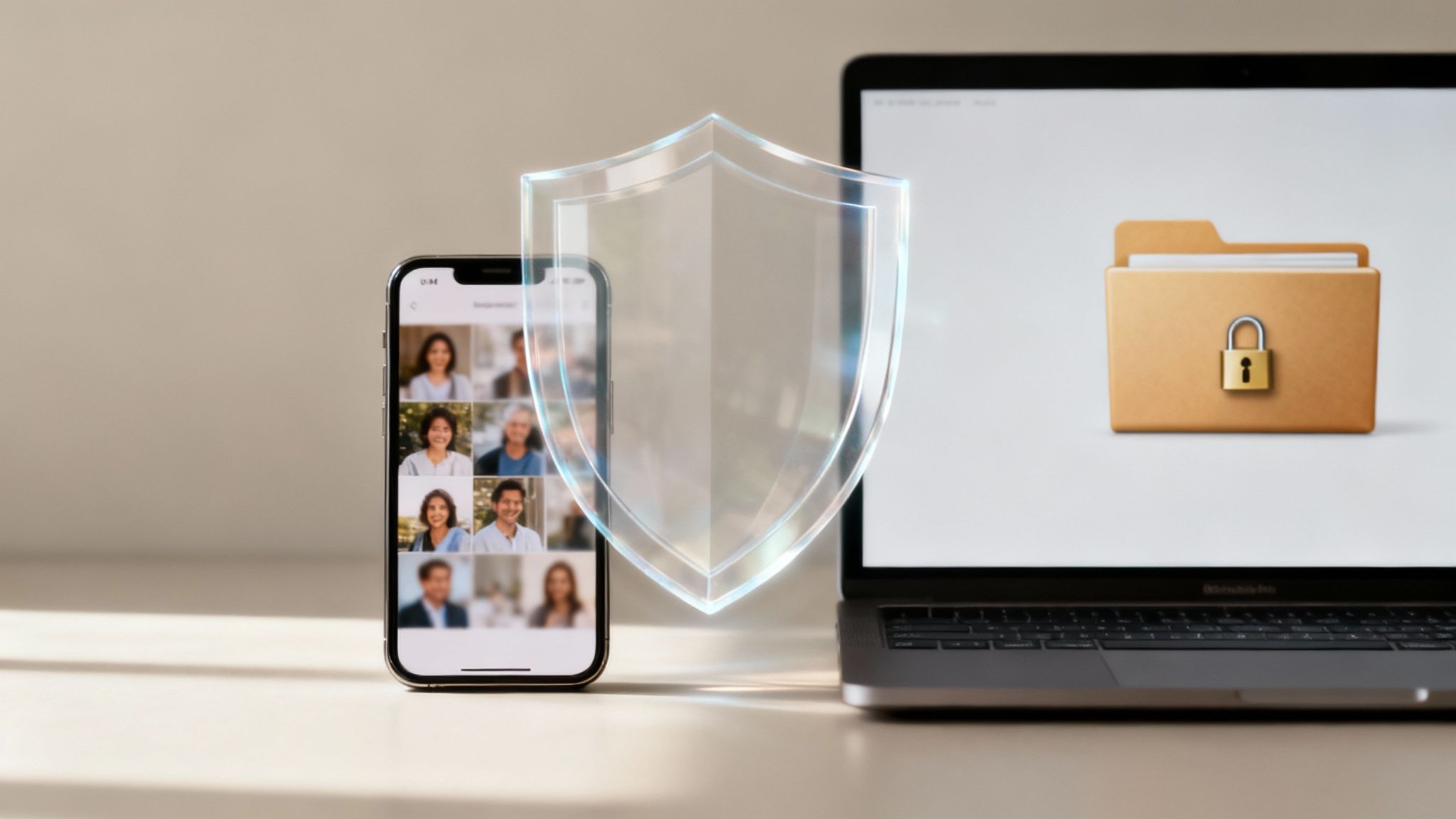
Think about a local hospitality business in Pacific Grove. If an employee's personal laptop gets a virus, it could spread to the company network and steal guest information. This could lead to a serious data breach, fines, and damage to your reputation. Managing these risks is essential for any local business with a remote team.
Why This Matters for Your Business
Every personal device that connects to your business is a potential entry point for cyberattacks. If an employee leaves your company, how do you make sure your data is removed from their personal phone or laptop? Without clear rules and the right technology, you can't. This creates a constant risk of data leaks.
Key Insight: You can get the benefits of BYOD without the security headaches. By setting clear policies and using modern tools, you can keep your company data safe on any device.
Actionable Steps to Secure Personal Devices
You can let your team use their own devices and still keep your business safe. The right plan involves both technology and clear rules. Good IT asset lifecycle management ensures every device, personal or company-owned, follows your security standards.
- Create a Clear Remote Work Policy: Write down the rules for remote work. This policy should explain what is expected for securing home networks and personal devices used for work.
- Use Layered Security: Don't rely on just one thing. Use a mix of security tools like firewalls to protect your network, secure cloud file systems (like Microsoft 365 or Google Workspace) to store data, and encrypted tools for communication.
- Separate Work and Personal Data: Use tools that create a secure, separate "work" section on personal devices. This keeps your company information isolated from personal apps and files.
- Train Your Team: Teach your employees how to spot security risks, like phishing emails, and what to do. A well-trained team is one of your best defenses.
Checklist for Secure Device Management
- Do you have a written remote work policy that everyone understands?
- Are you using a firewall to protect your company network?
- Is company data stored in a secure, cloud-based system?
- Can you remotely remove company data from a device if it's lost or an employee leaves?
- Do employees receive regular security awareness training?
Managing all devices is key to keeping a hybrid team safe and productive. For more help creating these policies, you can learn more about hybrid work security solutions on adaptiveis.net. We can help you set up these protections to give you control over your company’s data, no matter the device.
3. Mistake #3: Misconfiguring Cloud Tools and Overlooking Backups
Moving to the cloud with tools like Microsoft 365 or Google Workspace is a smart move for remote work. But one of the most common remote work IT mistakes to avoid in 2026 is setting them up incorrectly. A simple misconfiguration can accidentally expose your sensitive data to the public internet. This is like leaving a filing cabinet full of important documents unlocked in a public park.

For local businesses, the impact can be huge. A Salinas-based agricultural company could lose years of harvest data if their cloud storage isn't backed up properly. A small business in Marina could face a disaster if a ransomware attack locks their files and they have no way to restore them. These are not just "what if" scenarios; they happen to businesses every day.
Why This Matters for Your Business
Your data is one of your most valuable assets. When it's stored in the cloud, you are still responsible for protecting it. Incorrect settings can lead to data breaches, and a lack of backups can mean a simple mistake or a cyberattack could wipe out your business-critical information for good. A good backup and disaster recovery plan ensures you can get back to work quickly after any problem, minimizing downtime and lost revenue.
Key Insight: The cloud is powerful, but it's not magic. You still need to manage it properly. Expert setup and regular backups are essential to keep your data safe and your business running.
Actionable Steps for Cloud Security and Data Protection
Protecting your cloud environment and your data is critical. These steps will help you build a strong defense against data loss.
- Get an Expert Cloud Setup: Don't try to guess the settings. Work with an IT partner to make sure your cloud tools, like Microsoft 365, are configured correctly and securely from the start.
- Follow the 3-2-1 Backup Rule: This is the best practice for backups. Keep at least three copies of your data, on two different types of storage, with one copy stored off-site (like in the cloud).
- Automate Your Backups: Don't rely on someone remembering to back up files. Use an automated service that backs up all your data—on servers, computers, and in the cloud—without you having to think about it.
- Test Your Recovery Plan: A backup is only good if you know it works. Regularly test restoring your data to make sure you can get back up and running quickly when you need to.
Checklist for Cloud and Backup Security
- Has your cloud environment (like Microsoft 365) been professionally configured for security?
- Are you using an automated backup solution for all your important data?
- Does your backup plan follow the 3-2-1 rule?
- Do you test your backups regularly to make sure you can restore them?
- Is your backup data encrypted to keep it safe?
A solid data protection plan is a must-have for any business today. For more details on creating a plan, you can learn more about data backup and disaster recovery on adaptiveis.net. At Adaptive Information Systems, we design and manage backup solutions that give you peace of mind, knowing your business is protected.
Let’s Make Work-From-Anywhere Work Better for You
The move to remote work is a permanent change. As we look to 2026, the businesses that succeed will be the ones that build a strong, secure, and efficient IT system designed for a team that works from anywhere. This means getting ahead of problems instead of just reacting to them.
We've covered the three biggest remote work IT mistakes to avoid in 2026 and gave you a clear path to fix them.
Here’s what you need to remember:
- Treat Remote Work Seriously: Stop using temporary fixes. Build a long-term IT plan with the right tools, security, and support for your remote team.
- Secure Every Connection Point: Unsecured home networks and personal devices are a major risk. Create clear rules and use technology to protect your company data, no matter where it's accessed.
- Protect Your Cloud and Your Data: The cloud is a great tool, but it needs to be set up correctly. Make sure your cloud services are secure and that you have a solid, automated backup plan in place.
Moving Forward with Confidence
Avoiding these mistakes is about more than just preventing problems. It's about creating an advantage for your business. When your team can work safely and efficiently from anywhere, you can hire the best people, keep employees happy, and build a business that's ready for the future.
For businesses here in the Salinas area and across Monterey County, getting remote IT right is key to your growth. You don't need a huge IT department to have enterprise-level security. Your job is to run your business—let us handle the technology. Whether your team is remote, hybrid, or mobile — Adaptive Information Systems helps Salinas-area businesses build secure, efficient, and modern IT foundations for 2026. Let’s make work-from-anywhere work better for you.
Ready to ensure your business avoids these 3 remote work IT mistakes to avoid in 2026 and builds a stronger IT foundation? Let’s connect and create a customized strategy that fits your unique needs and budget. Adaptive Information Systems specializes in providing affordable, enterprise-level IT solutions that empower local businesses in Salinas and across the Monterey Bay to succeed in a work-from-anywhere world.
Adaptive Information Systems
380 Main St, Salinas CA 93901 | 831-644-0300 | hello@adaptiveis.net