
If you're running a business in Salinas, you know that every partnership matters. From your tech support to your suppliers, your success is tied to how well your partners perform. But are you getting the most from these relationships? Many businesses in Monterey County treat vendors like simple line items on a bill. This misses out on huge chances for growth, new ideas, and serious cost savings.
Good vendor management is more than just getting the lowest price. It's a smart way to give your company a real edge. It means building strong partnerships, lowering risks, and making sure every dollar you spend with a vendor brings value back to you. When you get this right, you turn simple deals into powerful assets that help your business grow.
This guide gives you a clear roadmap. We'll walk through eight key vendor management best practices, with practical advice for small and mid-sized businesses right here in our community. You'll learn how to check potential partners, manage contracts, track performance, and stop risks before they become problems. For a deeper dive into your vendor strategy, our comprehensive guide to vendor management best practices can be a helpful resource. Let's get started on turning your vendor relationships into a true business advantage.
1. Master the Art of Vendor Assessment and Due Diligence
Before you sign any contract, it's vital to know exactly who you're partnering with. A full check-up goes way beyond comparing prices. For your business, this means looking at a potential vendor's financial health, their ability to deliver, and—most importantly—their cybersecurity. Think of it as a background check for your business partners.
Spending time on this upfront is one of the most important vendor management best practices because it prevents expensive surprises later. By creating a standard process, you can pick vendors who meet your needs today and also fit your long-term goals, protecting you from risk.
How to Implement a Due Diligence Framework
A strong assessment process is your first line of defense. It makes sure a partner can keep their promises without creating new problems for your business.
- Financial Health Check: Ask for financial statements or credit reports. A vendor with money trouble could go out of business, leaving you in a tight spot. This is especially key for vendors providing critical software or services.
- Operational Capability Review: Ask for past work examples, references, and service-level agreement (SLA) samples. If you run a farm in Salinas, ask a potential IT provider for references from other local ag businesses to prove they know your industry.
- Cybersecurity and Compliance Audit: This is a must-do. Ask for their security policies, data protection rules, and any certifications (like SOC 2). Make sure they follow rules for your industry, like HIPAA for healthcare.
Key Insight: A vendor's security weakness can become your own. If they have a data breach, your sensitive business and customer information could be at risk.
By making your vetting process a checklist, you create a consistent way to review every potential partner. This careful approach helps you find not just any vendor, but the right partner to help your business grow safely.
2. Strategic Vendor Categorization and Portfolio Management
Not all vendors are the same. Trying to give every supplier the same amount of attention is a waste of time and can pull you away from the relationships that matter most. Strategic vendor categorization is a smart way to group your suppliers based on their importance, risk, and impact on your business.
This is a key part of vendor management best practices because it lets you customize how you manage each one. For a local ag company, the supplier for your essential irrigation software needs much more attention than the company that delivers coffee. By sorting your vendors, you can use your time and resources better, focusing on high-impact partners and simplifying how you work with low-risk ones.
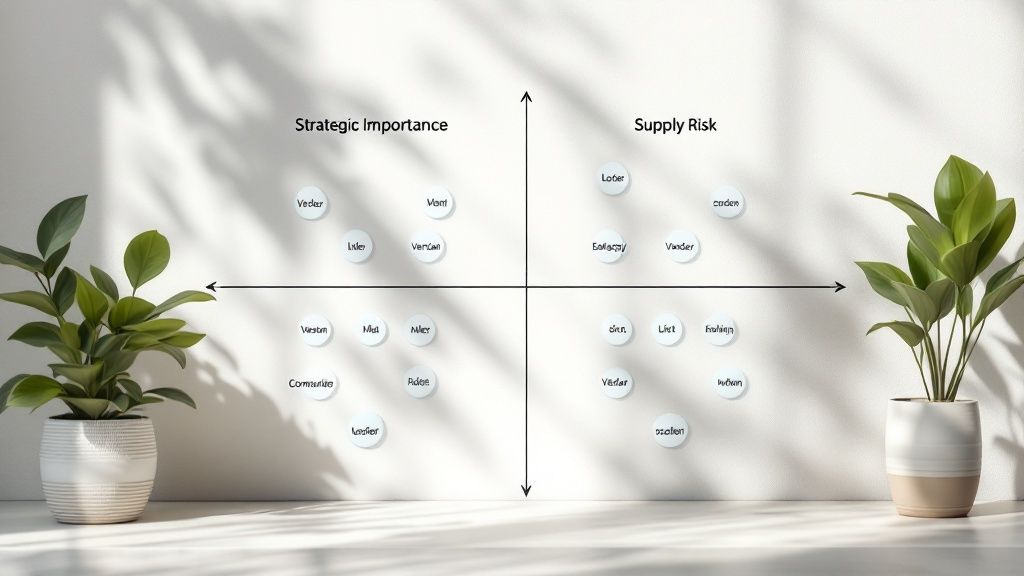
How to Implement a Vendor Categorization Framework
Using a categorization system helps you stop reacting to problems and start planning ahead. The goal is to match your management effort to the value and risk each vendor brings.
- Adopt a Simple Matrix: Start with a basic chart. Plot vendors based on "business impact" (high/low) and "supply risk" (high/low). This gives you four groups: strategic, leverage, bottleneck, and non-critical. This simple visual shows you your whole vendor portfolio at a glance.
- Define Management Strategies for Each Category: Your "strategic" partners (high impact, high risk) need close teamwork, frequent performance reviews, and planning together. For "non-critical" vendors (low impact, low risk), you can focus on being efficient, like automating orders to save time.
- Review and Realign Annually: Your business needs change, and so does the importance of your vendors. A supplier who is non-critical today might be strategic next year. Plan a yearly review to re-sort your vendors so it matches your current business goals. Your IT service provider, for example, is a partner whose strategic importance often grows over time. Learn more about the evolving role of IT partners here.
Key Insight: A one-size-fits-all approach to vendor management wastes time on low-impact relationships and doesn't give enough attention to high-risk, strategic partners.
By categorizing your vendors, you can use your resources wisely, manage risks better, and build stronger relationships with the partners who are truly key to your success.
3. Robust Contract Management and SLA Governance
A handshake deal won't protect you when a critical service goes down. Strong contract management is the practice of carefully creating, signing, and monitoring agreements to make sure vendors do what they promised. This includes setting up clear Service Level Agreements (SLAs) that define exactly what you expect in terms of performance, uptime, and support.

This organized approach is a core part of vendor management best practices because it turns vague promises into things you can actually measure. By making every part of the relationship official, you create a system of accountability that protects your business, makes responsibilities clear, and gives you a way to solve problems before they hurt your operations.
How to Implement a Contract Governance Framework
A strong contract is your rulebook for the vendor relationship. It ensures both you and your vendor are on the same page about what success looks like.
- Define Crystal-Clear SLAs: Go beyond general uptime numbers. For a hotel in Monterey, an SLA for a booking system should state not only 99.9% uptime but also how fast it must work during tourist season and a four-hour response time for major problems.
- Establish Key Performance Indicators (KPIs): Include numbers you can measure (like delivery times) and qualitative feedback (like customer satisfaction). This gives you a complete picture of how the vendor is doing.
- Automate Where Possible: Use contract management software to track important dates like renewals, check on compliance, and manage tasks. This helps you avoid missed deadlines and keeps all your vendor documents in one place, so you can ditch the messy spreadsheets.
Key Insight: Your vendor contract isn't just a legal paper; it's a tool for managing your operations. It should actively guide the relationship and set the standard for performance.
By treating contracts as living documents and SLAs as firm benchmarks, you build a foundation of trust and accountability. This careful approach makes sure you get the value you paid for and that your vendors act as true partners in your success.
4. Continuous Performance Monitoring and KPI Management
Signing a contract is just the beginning of your vendor relationship. To make sure you get the value you’re paying for, you have to continuously track, measure, and review your vendor's performance. This means setting up clear key performance indicators (KPIs) and checking them regularly to ensure your partners are meeting your expectations.
This ongoing check-in is a key part of vendor management best practices because it turns your vendor relationships from a simple cost into a strategic advantage. By watching performance, you can solve issues before they get big, find ways to improve, and make sure your vendors are helping you reach your business goals. For a business in Salinas, this could mean tracking your IT provider's network uptime to avoid costly work stoppages.
How to Implement a Performance Monitoring System
A solid monitoring system gives you the facts you need to manage vendors well. It changes conversations from being about feelings to being about results.
- Establish Outcome-Based KPIs: Focus on what really matters. Instead of tracking the number of support tickets a vendor closes, measure the average time it takes to solve them or your team's satisfaction score. For a critical software provider, track uptime and system speed.
- Use a Balanced Scorecard: Don't just rely on one number. Create a scorecard that looks at vendors from different angles, like quality, on-time delivery, cost, and customer service. This gives you a complete view of their performance. For more complex IT setups, a dedicated network performance monitoring solution can provide the detailed data you need for this scorecard.
- Schedule Regular Performance Reviews: Set up monthly or quarterly meetings to talk about performance data with your vendors. Share the scorecard openly and use the meeting to celebrate wins, address problems, and work together on improvements.
Key Insight: What gets measured gets managed. Without clear KPIs and regular reviews, vendor performance can slip, service quality can drop, and your business can suffer.
By creating a system for monitoring performance, you ensure everyone is held accountable and drive constant improvement. This data-driven approach strengthens your partnerships and guarantees your vendors are actively helping your company succeed.
5. Strategic Relationship Management and Partnership Development
The best vendor management goes beyond simple transactions. Instead of just buying a service, you should aim to build a strategic partnership with your key suppliers. This approach treats vendors as part of your team, working together toward the same goals, sparking new ideas, and creating value for both of you. Think of it less as a purchase and more as a team effort.
This shift is one of the most powerful vendor management best practices because it gives you a long-term competitive edge. By investing in these relationships, your business can become more efficient, get access to new ideas, and build a stronger supply chain that can handle market changes.
How to Build a Strategic Partnership
Turning a supplier into a strategic partner takes real effort to align your goals, work, and rewards. Here is how you can build a partnership that delivers more than just the basics.
- Establish Partnership Criteria: Not every vendor is a strategic partner. Figure out which suppliers are essential to your business and have the potential for a deeper relationship. A hospitality company in Marina might see its booking software provider as a strategic partner, while its office supply vendor is just a simple transaction.
- Create Joint Planning Sessions: Hold regular, high-level meetings to talk about long-term goals, future challenges, and chances for innovation. This is more than a simple performance review; it's about planning for the future in a way that helps both of you.
- Develop Shared Metrics and Incentives: Move past agreements that only punish bad performance. Create rewards that pay the vendor for helping you reach your business goals, like making more money or improving customer happiness. This connects their success directly to yours.
- Invest in Cultural Alignment: True partnership grows from shared values. Think about joint training sessions to improve communication and build a sense of being on one unified team.
Key Insight: A transactional vendor sells you a solution to a problem. A strategic partner helps you find problems you didn't even know you had and works with you to build the solution.
By carefully growing these key relationships, you turn your supply chain into a source of strength and innovation. This approach ensures your most important partners are not just working for you, but working with you to grow your business.
6. Comprehensive Risk Management and Business Continuity Planning
Relying on outside vendors brings new risks to your business. A smart approach to risk management means you find, check, and reduce potential problems related to your vendors. These can range from service failures and data breaches to a vendor suddenly having financial trouble. It's about being ready for the unexpected so your business can keep running smoothly.
This preparation is one of the most critical vendor management best practices because it lets you plan ahead instead of just reacting to problems. By making backup plans and understanding your vendor-related weak spots, you make your business stronger. This ensures a single vendor issue doesn't shut you down.
How to Implement a Risk Management Framework
A strong risk management and business continuity plan is your safety net. It makes sure that when a vendor problem comes up, you have a clear, pre-planned path to keep your business running.
- Diversify Critical Suppliers: Don't put all your eggs in one basket. If you rely on one software for a key job, what happens if they go out of business or have a major outage? For example, a Salinas ag company should have a backup logistics provider ready before the busy harvest season starts.
- Conduct Regular Risk Assessments: From time to time, re-check your key vendors. This includes looking at their financial health, security, and anything else that could affect them, like new laws or market changes.
- Develop and Test Contingency Plans: Don't just write a plan; test it. A business continuity plan lists the exact steps to take if a vendor fails. This includes keeping updated contact lists, steps for escalating issues, and even running practice drills. You can explore a detailed business recovery plan example to see what this looks like in practice.
Key Insight: Your business's ability to continue is only as strong as your vendors' stability. If they don't have a disaster recovery plan, you take on their risk.
By officially listing potential vendor risks and creating a plan to deal with them, you protect your money, your reputation, and your customers' trust. This strategic thinking ensures that even when a partner has a problem, your business stays strong.
7. Embrace Technology with Vendor Management Platforms
Managing vendors by hand with spreadsheets and emails is slow and full of errors, especially as your business gets bigger. Using a dedicated vendor management platform brings all vendor-related tasks into one automated system. For businesses in Monterey County, this means you get a clear, live view of vendor performance, contracts, and risks without getting stuck in paperwork.
This tech-focused approach is a key part of modern vendor management best practices because it gives you the control you need to make smart decisions. By automating tasks like onboarding, performance tracking, and compliance, you free up your time to focus on building stronger vendor relationships that help your business.
How to Implement a Vendor Management System
Choosing and setting up the right platform can transform how you work. The goal is to find a system that fits your needs now and can grow with you.
- Start with Core Functionality: Don't try to do everything at once. Begin with the basics, like a central vendor list, contract management, and performance dashboards. You can add more features, like risk management or automated invoicing, as you get more comfortable.
- Ensure Data Integrity: A platform is only as good as its data. Set clear rules from the start to make sure all information is accurate, consistent, and up-to-date. This is key for getting reports you can trust.
- Prioritize Integration and Training: The platform should work smoothly with your other systems, like your accounting software or your help desk software. Make sure your team gets good training so everyone uses it and you get the most out of your investment.
- Track ESG and Sustainability Goals: Modern platforms can help you track more than just money. To manage your environmental impact across your supply chain, think about using special tools. For a look at the best tools for tracking Scope 3 supplier emissions, you can find resources that detail leading solutions.
Key Insight: A vendor management platform doesn't just hold information; it turns data into insights you can act on. This lets you manage risks and find chances to save money and improve performance.
By using technology, you shift from reacting to problems to planning ahead. This allows your business to manage relationships at scale, enforce rules consistently, and unlock the full potential of your supply chain.
8. Compliance Management and Regulatory Adherence
Following the complex web of industry rules is a big challenge. Your vendors can either be a strong link in your compliance chain or a major weak spot. Good vendor compliance management means you regularly check that every partner meets the legal, regulatory, and ethical standards for your industry. This is not a one-time check; it's an ongoing process.
This focus on oversight is one of the most vital vendor management best practices because a vendor's failure to comply can lead to big fines, legal trouble, and damage to your reputation. By building compliance into every step of your vendor process, you protect your business from risks in your supply chain and build a more trustworthy operation.
How to Implement a Compliance Management Framework
A clear system ensures that both you and your vendors follow all the rules. This protects sensitive data, keeps your business running smoothly, and builds trust with your clients.
- Establish a Compliance Baseline: Keep a central list of all the rules and policies that apply to your business and vendors. For a financial firm in Monterey, this includes tracking SOX and FINRA rules. For a healthcare provider, it means making sure all tech vendors are HIPAA compliant.
- Automate Monitoring and Audits: Use software to track vendor certifications and when they expire. Schedule regular compliance checks based on each vendor's risk level. This proactive approach saves you from a last-minute panic when a key certification is about to run out. To ensure your vendor data is safe and compliant, good data management is key. You can learn more about setting up these systems by reviewing these essential data governance best practices.
- Define Clear Escalation Paths: Create a formal process for what to do when a vendor fails a compliance check. If a vendor fails an audit, your team should know the immediate steps to take, who to tell, and how to create a fix-it plan quickly. You can get started with a helpful resource by reviewing a small business compliance checklist.
Key Insight: A vendor’s compliance failure is your compliance failure. Regulators often hold your business responsible for the mistakes of your third-party partners.
By treating compliance as a continuous, team effort instead of a one-time task, you turn it from a chore into a business advantage. This ensures your entire supply chain operates with integrity.
Vendor Management Best Practices Comparison
| Item | Implementation Complexity 🔄 | Resource Requirements ⚡ | Expected Outcomes 📊 | Ideal Use Cases 💡 | Key Advantages ⭐ |
|---|---|---|---|---|---|
| Comprehensive Vendor Assessment and Due Diligence | High – detailed multi-criteria evaluation | High – expert involvement and time-consuming | Reduced vendor risk, alignment with business objectives | Vendor selection requiring in-depth risk analysis | Reduces failures, strengthens negotiation position |
| Strategic Vendor Categorization and Portfolio Management | Medium to High – ongoing categorization and reassessment | Medium – continuous effort and maintenance | Optimized resource allocation, risk diversification | Managing large vendor portfolios strategically | Focused management, improved negotiation leverage |
| Robust Contract Management and SLA Governance | Medium – complex contract setup and monitoring | Medium to High – negotiation and admin overhead | Clear obligations, performance measurement | Managing contractual obligations and SLAs | Legal protection, accountability, fewer disputes |
| Continuous Performance Monitoring and KPI Management | Medium to High – requires data systems and analysis | High – data collection, analytics expertise | Proactive improvements, data-driven decisions | Ongoing vendor performance tracking | Enables continuous improvement and quality gains |
| Strategic Relationship Management and Partnership Development | High – requires collaboration and cultural efforts | High – time-intensive relationship building | Innovation, stronger vendor commitment | Long-term strategic partnerships | Drives innovation, reduces churn, priority support |
| Comprehensive Risk Management and Business Continuity Planning | High – extensive risk frameworks and contingency plans | High – planning and redundancy investments | Minimized disruptions, faster recovery | High-risk or critical vendor scenarios | Enhances preparedness and stakeholder confidence |
| Technology-Enabled Vendor Management Platforms | High – significant implementation and adoption effort | High – IT investment and user training | Improved efficiency, centralized control | Automating and scaling vendor management processes | Speeds up processes, reduces errors, analytics insight |
| Compliance Management and Regulatory Adherence | Medium to High – ongoing monitoring and audits | Medium to High – compliance resources | Reduced legal risk, ensured regulatory conformity | Highly regulated industries and compliance-driven | Maintains reputation, prevents violations |
Your Next Step: Building Stronger Partnerships in Salinas
Handling all your vendor relationships can feel like a lot, but it doesn't have to be. As we've seen, putting these vendor management best practices into place isn't about adding more work. It’s about turning your vendor talks from simple deals into strategic partnerships that help you succeed. By planning ahead instead of just reacting to problems, you build a strong foundation for your business that can support your growth for years.
Think of it this way: your business in Salinas is a living system. Each vendor—whether they provide your internet, your accounting software, or supplies for the fields—is a key part of that system. The health of your business depends on how well these partners perform. This is why planning ahead is so important. It’s not just about getting the best price; it’s about making sure your partners are reliable, secure, and share in your success.
From Checklist to Culture: Key Takeaways
We’ve covered eight key areas, from checking vendors at the start and sorting them strategically to managing contracts and tracking performance. The goal isn't just to check these items off a list. The real power comes when you make these ideas a part of your company's everyday culture.
Here are the most important things to remember:
- Clarity is King: Vague expectations lead to bad results. Your contracts, Service Level Agreements (SLAs), and Key Performance Indicators (KPIs) must be crystal clear, measurable, and agreed on from day one.
- Relationships Drive Results: The strongest vendor partnerships are built on more than just paperwork. Regular talks, working together, and mutual respect turn a supplier into a true partner who cares about your future. This is especially true here in the close-knit business community of Monterey County.
- Proactive Beats Reactive: Don’t wait for a service to go down, a data breach, or a compliance issue to look closely at your vendors. A steady process for managing risk, reviewing performance, and checking compliance is your best defense against future problems.
- Technology is Your Ally: You don’t need a huge budget to use technology. Even simple tools can help you keep contracts in one place, track performance, and automate reminders. This gives you and your team valuable time back to focus on what you do best.
Putting Vendor Management into Action
Getting good at this is a journey. You don't need a whole department to start making real improvements today. Begin with one high-impact area. Maybe it's reviewing the contract for your most important IT provider or setting clear KPIs for a key software partner. Small, steady steps build momentum and create big value over time.
In the end, a strong vendor management strategy helps your business become more flexible, secure, and competitive. It makes sure every dollar you spend on outside services is an investment that pays you back, protecting your business and helping you succeed in the Salinas Valley market and beyond. By adopting these vendor management best practices, you're not just managing suppliers; you're building a network of partners dedicated to helping you win.
Ready to apply these best practices to your most critical IT vendors but not sure where to start? Let Adaptive Information Systems be your guide. We specialize in providing local Salinas and Monterey businesses with enterprise-level IT strategy and support, ensuring your technology partnerships are secure, reliable, and perfectly aligned with your goals.
Adaptive Information Systems
380 Main St, Salinas CA 93901 | 831-644-0300 | hello@adaptiveis.net