
If you're a business owner in Salinas, you know that success means being prepared. From agriculture and hospitality to professional services, problems can pop up when you least expect them. A wildfire, power outage, or even a server crash can threaten your entire operation. A solid plan isn't a "nice-to-have"—it's a must-have for survival. But where do you even start?
Instead of one giant, confusing document, a great plan is built from different parts. We’re going to walk you through six key types of plans, from IT disaster recovery to supply chain continuity. Think of each one as a chapter in your company's complete recovery playbook. For each business recovery plan example, we'll break down what it is, why you need it, and give you simple steps you can use today. To build your readiness, you can also explore the Five Steps for Creating a Business Continuity Plan.
This guide is designed to give you the confidence to protect the business you've worked so hard to build. Let's get started.
1. IT Disaster Recovery Plan
An IT Disaster Recovery Plan (DRP) is a vital part of any good business recovery plan example. It gives you a detailed, step-by-step guide for getting your technology and computer systems back online after a major problem. This could be anything from a server failure or a cyberattack to a natural disaster that affects your office. The main goal is to reduce downtime and data loss so your business can get back to work as fast as possible.
How It Works: A Simple Breakdown
A strong IT DRP is built on two key ideas:
- Recovery Time Objective (RTO): How long can your business afford to be offline? An hour? A day?
- Recovery Point Objective (RPO): How much data can you afford to lose? The last 15 minutes of work? The last 24 hours?
These two goals decide what kind of technology you need.
For instance, an accounting firm in Salinas might need to be back online in two hours and can't lose more than 15 minutes of data during tax season. This means they need powerful tools like real-time data backups to the cloud. On the other hand, a local gift shop might be okay with being down for 24 hours, which allows for simpler, more affordable backup options.
Actionable Takeaways for Your Business
To build a strong IT DRP, focus on these steps:
- Test Your Plan: Don't wait for a real disaster. Run practice drills to test your backup systems. This helps you find weak spots before they become big problems.
- Know What You Have: Keep an updated list of all your computers, software, and important data. You can't protect what you don't know you have.
- Keep Vendor Info Handy: Have contact information ready for your key IT partners. They are a critical part of your recovery team.
- Train Your Team: A plan is useless if no one knows how to use it. Train several employees on recovery tasks so you’re not relying on just one person.
The infographic below shows the basic steps for starting an IT recovery.
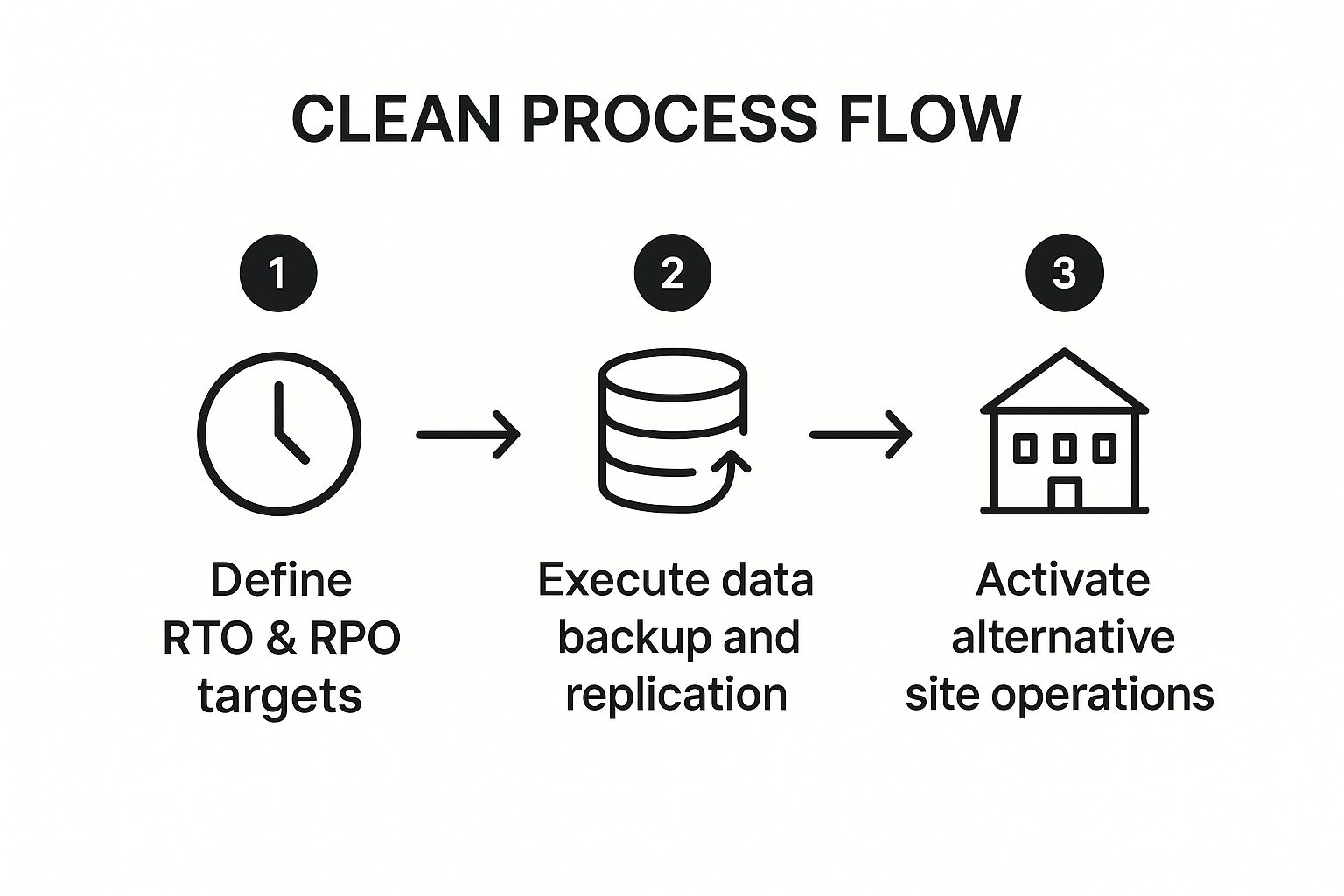
This visual shows that a good recovery starts with clear goals (RTO/RPO). Those goals tell you how to back up your data, which then guides you on how to get everything running again. For a deeper look at building a solid strategy, learn more about data backup and recovery for Salinas-Monterey businesses.
2. Supply Chain Recovery Plan
A Supply Chain Recovery Plan is a guide to keep your business running when there are problems with your suppliers, manufacturers, or delivery companies. It helps you continue making your products and serving your customers even when you face challenges like natural disasters or shipping delays. The main goal is to avoid shutting down and losing money by having backup options ready to go.

How It Works: A Simple Breakdown
A good Supply Chain Recovery Plan is all about knowing your network and having backups. Knowing your network means you understand every company you rely on. Having backups means you have other options so that one problem doesn't stop your whole operation. This business recovery plan example is about being prepared instead of panicking later.
For example, a Salinas Valley farm depends on a single company for its packaging. If a flood hits that company's warehouse, the farm can't ship its produce. A good recovery plan would mean they’ve already found and approved a backup packaging supplier in a different state. They might also keep extra packaging material on-site. This way, they can keep working without a major interruption.
Actionable Takeaways for Your Business
To build a solid Supply Chain Recovery Plan, focus on these steps:
- Map Your Key Suppliers: Make a list of every supplier that is essential to your business. Note if you only have one source for something important. Knowing your weak spots is the first step.
- Find Backup Suppliers in Different Places: Build relationships with suppliers in other cities or states. This protects you if a disaster hits one specific area.
- Keep Safety Stock: Decide on a minimum amount of key supplies to always have on hand. This buffer gives you time to switch to your backup plan without stopping work.
- Create an Emergency Contact List: Keep an updated list of all your suppliers with multiple contacts and emergency phone numbers. This is a huge help when you need to act fast.
Putting these steps in place will make your business much stronger. To learn more about protecting your supply chain, checking out these Top Supply Chain Resilience Strategies is a smart move. Often, these complex systems are managed by outside experts, a role you can explore by understanding IT service providers in managing business systems.
3. Financial Recovery Plan
A Financial Recovery Plan is a detailed guide to get your business's money situation back on track after a major problem. This type of business recovery plan example is key for getting through tough economic times, sudden market changes, or other crises that threaten your company's finances. Its purpose is to get your cash flow stable, manage your debts, and find the money you need to stay open and become profitable again.

How It Works: A Simple Breakdown
This plan works by first getting a clear, honest look at your company's financial health and then taking quick, firm action. The first step is to get total control over your cash flow. This means you need to track every dollar coming in and going out, often on a weekly basis. From there, you focus on cutting costs and managing your debts smartly.
For example, a restaurant in Pacific Grove that sees a sudden drop in tourism might need a financial recovery plan. The owner would immediately start tracking daily cash flow, cut back on expensive menu items that aren't selling, and talk to their bank and suppliers about adjusting payment schedules. This allows them to stay afloat during the slow season and be ready for when business picks up again.
Actionable Takeaways for Your Business
To create a strong Financial Recovery Plan, use these proactive steps:
- Track Your Cash Flow Weekly: Don't wait for a crisis. Make detailed cash flow tracking a normal part of your business. Learning how to improve business cash flow is a key part of any financial plan.
- Build Relationships with Lenders: Get to know people at more than one bank before you need an emergency loan. Having these connections can make getting cash much faster when you need it.
- Rank Your Expenses: Make a list of your expenses from "must-have to survive" to "nice-to-have." This helps you make smart cuts quickly if your income drops.
- Talk to Your Partners: Be open and honest with your lenders, suppliers, and investors. Talking to them early can often lead to better payment terms and more understanding. While your finances are important, a cybersecurity risk assessment is also key to preventing digital threats that could cause a financial crisis.
4. Human Resources Recovery Plan
A Human Resources (HR) Recovery Plan is a "people-first" strategy. It's designed to protect and support your team—your most valuable asset—during and after a crisis. While an IT plan restores computers, this plan helps restore your team's safety, stability, and ability to work. It’s a key part of any good business recovery plan example, covering everything from employee communication and remote work to mental health support. The main goal is to make sure your team is safe, informed, and able to do their jobs, no matter what happens.
How It Works: A Simple Breakdown
A strong HR Recovery Plan is built on communication, flexibility, and support. It lays out clear rules for managing your team when things aren't normal. This isn't just about rules; it's about keeping trust and morale high during a stressful time. The plan explains how you will protect your employees' well-being while adapting to new challenges.
For instance, a law firm in Carmel could create a contact list to make sure every employee gets important news within 30 minutes of an emergency. They would also have a plan for remote work ready to go, maybe even offering a small payment to help employees set up a home office. In contrast, a local Salinas agricultural company, where many jobs can't be done remotely, might focus its plan on-site safety rules, different shift times, and health checks to protect its workers.
Actionable Takeaways for Your Business
To build a plan that puts your people first, focus on these steps:
- Set Up Clear Communication: Create a crisis communication plan that says who will share information, how they will share it (text, email, etc.), and how often. Being consistent helps reduce anxiety.
- Invest in Remote Work Tools: Make sure your team has the technology and training to work from anywhere. This includes secure access to files and good communication software.
- Offer Wellness Resources: A crisis is tough on people. Offer access to mental health resources and encourage managers to check in on their team members.
- Create Flexible Policies: Your normal HR rules might not work during a disaster. Develop flexible policies for time off, work hours, and remote work that you can turn on quickly when needed.
A well-supported HR plan often relies on strong technology. To see how tech partners can help you secure a remote workforce, you can learn more from a business guide to managed IT services.
5. Customer Relationship Recovery Plan
A Customer Relationship Recovery Plan is a vital part of any business recovery plan example that deals with the people you serve. It lays out the exact steps you'll take to keep your customers' trust during and after a problem. While other plans focus on fixing systems, this one is all about clear communication, helpful support, and keeping your service going. This helps you keep customers and protect your brand's good name.
How It Works: A Simple Breakdown
This plan works on a simple idea: how you talk to customers during a crisis is just as important as how you fix the problem. The goal is to manage their expectations, show you care, and prove you're working hard to solve their issues. This stops a service problem from turning into a long-term reputation problem.
For example, a hotel in Monterey has a computer crash that affects its booking system. Their plan would tell them to immediately post a message on social media and send an email to customers. The message would explain the problem and give an estimate of when it will be fixed. On the other hand, an agricultural supplier in Salinas that has a shipping delay would use its plan to call its distributors, offer other options, and give clear, honest updates to protect those important business relationships.
Actionable Takeaways for Your Business
To build an effective customer recovery plan, focus on these steps:
- Communicate Early and Often: Don't wait for customers to complain. Be the first to tell them about the problem through email, social media, and your website. Give them regular, honest updates.
- Empower Your Frontline Team: Give your customer service staff the power to make customers happy. This might mean offering discounts, credits, or other help. This can turn a bad experience into a good one.
- Track Customer Happiness: Use surveys and social media to see how customers are feeling during the recovery. This data tells you if your efforts are working.
- Offer Real Compensation: A simple "sorry" might not be enough. Have a plan to offer something of value, like a discount on a future purchase, to show you appreciate their patience.
6. Operational Recovery Plan
An Operational Recovery Plan is a complete guide for restoring your main business activities after a disruption. Unlike an IT plan that focuses on technology, this plan deals with the physical parts of your business: your building, equipment, and daily tasks. It’s the blueprint for getting your assembly line running, your service team back to work, or your store reopened. It’s a must-have piece of any complete business recovery plan example.
How It Works: A Simple Breakdown
This plan is all about reducing downtime by planning ahead. The main idea is to identify everything you need to deliver your product or service and then create a backup plan for each part. This means you need to deeply understand how your business works, from your suppliers to your specific machines.
For example, an agricultural packing house in Salinas would find backup suppliers for boxes and identify extra cold storage facilities in nearby Marina. They would also train staff to use different types of equipment. Their plan would kick in if there was a fire or a major equipment failure, with the goal of getting shipments out on time to avoid spoiled produce and lost contracts.
Actionable Takeaways for Your Business
To build a strong Operational Recovery Plan, focus on these steps:
- Write Down Your Key Processes: Create detailed, step-by-step guides for every important task. This ensures that anyone can step in and get the job done right.
- Find Backup Resources: Don't wait for a crisis to look for new suppliers or a temporary office. Find and approve backup vendors and rental companies ahead of time.
- Cross-Train Your Employees: Your team is your best resource. Training employees to do more than one job makes your business more flexible. This way, if a key person is out, things don't grind to a halt.
- Build Strong Vendor Relationships: Keep in close contact with your most important suppliers and service providers. A good relationship can mean you get priority service in an emergency.
Focusing on these details makes your business stronger from the ground up. This practical planning works well with your digital security, and a great place to start is with our small business guide to network security.
6 Business Recovery Plan Examples Comparison
| Recovery Plan | 🔄 Implementation Complexity | ⚡ Resource Requirements | 📊 Expected Outcomes | 💡 Ideal Use Cases | ⭐ Key Advantages |
|---|---|---|---|---|---|
| IT Disaster Recovery Plan | High – needs special IT skills | High – needs backup systems | Reduces downtime & data loss | Businesses that rely on IT | Protects against cyber threats |
| Supply Chain Recovery Plan | High – needs lots of coordination | High – needs backup suppliers | Keeps products available | Businesses with complex supply chains | Makes sourcing more flexible |
| Financial Recovery Plan | Medium-High – needs financial skill | Medium – needs cash planning | Restores cash flow & confidence | Companies with money troubles | Provides a clear financial roadmap |
| Human Resources Recovery Plan | Medium – needs new policies | Medium – needs remote work tech | Keeps team stable & morale high | Businesses managing their workforce in a crisis | Supports remote work & keeps good employees |
| Customer Relationship Recovery Plan | Medium – needs good communication | Medium – needs customer support tools | Keeps customers loyal & protects brand | Businesses focused on customer service | Builds trust & protects revenue |
| Operational Recovery Plan | High – needs facility & process work | High – needs money for equipment | Restores business functions step-by-step | Businesses needing to get physical operations back online | Reduces downtime & gets work flowing again |
Putting It All Together: Your Next Steps for a Stronger Business
We've looked at several different types of recovery plans, from protecting your computers to taking care of your customers during a crisis. Looking at each business recovery plan example shows one important thing: a strong business isn't protected by one giant document. It's protected by a set of smaller, focused, and actionable plans that all work together.
The key is to not get overwhelmed. You can, and should, start with the area that is the biggest risk to your business. For many companies in Salinas and across Monterey County, especially in our agriculture and hospitality industries, that starting point is technology. A network outage, a server failure, or a cyberattack can stop everything in an instant.
Key Takeaways for Your Recovery Strategy
Thinking about the examples we looked at, a few main ideas stand out. A strong recovery plan is more than just a document; it's a living strategy that should be:
- Specific and Actionable: Vague goals won't help in an emergency. Your plan needs clear steps and assigned roles. Knowing exactly who to call and what to do first saves precious time.
- Complete but in Pieces: Your overall plan should cover everything from money to people to operations. But breaking it into separate parts makes it easier to create, test, and update.
- Tested and Improved: A plan that just sits in a binder is likely to fail. Regular testing is the only way to find problems and make sure your team is truly ready.
- Focused on Communication: Every single plan we talked about stressed the importance of clear, timely communication. You must have a plan for keeping your employees, customers, and partners in the loop.
Your Actionable Next Steps
Feeling like this is too much? It doesn't have to be. The goal is to make progress, not to be perfect. Here is a simple, three-step process to get you started today.
- Find Your Biggest Risk: What one thing, if it failed, would cause the most damage to your business right away? For most, it's their computer systems and data.
- Draft a Simple Plan: Using the examples as a guide, write a basic one-page plan for that single risk. List the immediate response steps and who is in charge of each one. This simple document is better than a complex plan you never finish.
- Hold a "What-If" Meeting: Get your key team members together for 30 minutes. Talk through a realistic disaster scenario. This simple chat will show you where your blind spots are and get everyone thinking about being prepared.
By focusing on one business recovery plan example at a time, you can build a stronger business that is ready for anything.
Seeing these examples shows that a complete business recovery plan is really a collection of smaller, focused plans that work together. At Adaptive Information Systems, we specialize in creating affordable, enterprise-level Backup & Disaster Recovery solutions for businesses right here in Salinas and Monterey County. We can help you build a strong IT recovery plan that protects your data, reduces downtime, and gives you peace of mind.
Ready to take the first, most important step?
Adaptive Information Systems
380 Main St, Salinas CA 93901 | 831-644-0300 | hello@adaptiveis.net