
For many business owners in Salinas, the phrase "IT support" brings to mind frantic calls about a crashed server or a computer that won't turn on. But what if IT support isn’t just for emergencies? What if it’s the very thing that prevents them from happening in the first place?
As a local business owner, you wouldn't wait for a total breakdown on Highway 101 to think about car maintenance. You get regular oil changes to keep the engine running smoothly. Your business technology deserves the same forward-thinking approach, and that's where we come in.
The Real Cost of a "Wait and See" IT Strategy
We hear a common question from business owners across Monterey County: “Why pay for IT monthly when we rarely have problems?” On the surface, it sounds logical. Why pay for a service you don't think you need right now?
However, recent insights show that most small businesses are shifting toward proactive IT—because the cost of downtime and data loss from waiting is often far higher than preventive support. This reactive "wait and see" strategy misses the quiet, invisible risks that build up behind the scenes. It's like a small, undetected leak in a pipe—you don't notice the problem until you walk into a flooded office.
Unseen Problems Are Draining Your Resources
What this actually means for you is that IT issues aren’t always visible—slow networks, security gaps, and outdated systems quietly drain performance until a full-blown outage occurs. They don't announce themselves with a smoking server. Instead, they operate in the shadows, slowly chipping away at your team's productivity and your bottom line.
These silent threats are the real killers:
- Slow Networks: Those minor slowdowns that seem like a small annoyance? They add up across your team, translating into hours of lost productivity every week.
- Hidden Security Gaps: An unpatched piece of software or a misconfigured firewall is like leaving a side door unlocked for cybercriminals. Your sensitive company and client data is exposed.
- Outdated Systems: Running on old hardware or software doesn't just slow you down. It makes you a prime target for security breaches that were fixed years ago in newer versions.

The reality is that a "wait and see" approach is really a "wait and fail" strategy. By the time a problem becomes obvious, the damage—in lost revenue, productivity, and reputation—is already done.
This old-school, reactive "break-fix" model makes IT a completely unpredictable expense. One server failure or data breach can slam you with an emergency repair bill for thousands of dollars. That doesn’t even touch the income you lose while your business is at a standstill.
The solution is to shift to a managed IT plan that includes 24/7 monitoring, patch management, and real-time threat alerts—so you're never caught off guard. To get a better sense of the numbers, you can explore how an in-house IT team's reactive work can cost more than you think.
What Proactive Managed IT Actually Means for Your Business
Let’s be honest, you probably only think about "IT support" when a computer blue-screens or the internet grinds to a halt. You see it as an emergency service. But what if your IT support could prevent most of those emergencies from ever happening? That’s the entire point of a modern, proactive approach.
Think of it like this: proactive IT is like having a security guard actively patrolling your building 24/7. They’re checking locks, monitoring cameras, and stopping a break-in before it happens. Reactive IT is like calling the police to file a report after your most valuable assets are already gone.
The Core of a Proactive Strategy
A proactive managed IT plan is all about shifting your business from a state of reaction to a state of readiness. This involves a few key activities working together to keep your operations running smoothly, whether you're running a busy restaurant in Carmel or managing an agricultural firm in Salinas.
These core elements include:
- 24/7 System Monitoring: We become your digital lookout, constantly watching your network, servers, and computers for early signs of trouble, like a failing hard drive or unusual network traffic. This lets us fix problems before they cause costly downtime.
- Consistent Patch Management: Software developers constantly release security updates ("patches") to fix new vulnerabilities. We make sure these patches are tested and applied immediately across your devices, closing the digital windows that cybercriminals love to crawl through.
- Real-Time Threat Detection: Using advanced security tools, we actively scan for malware, viruses, and phishing attempts. This real-time defense stops threats in their tracks, before they can lock down your data.
What this actually means for you is that IT issues aren’t always visible—slow networks, security gaps, and outdated systems quietly drain performance until a full-blown outage occurs.
This constant vigilance prevents the small, nagging issues that bog down your daily work and protects you from major disasters. To get a better sense of how the technical pieces fit together, exploring a technical guide to managed IT services for small business can provide deeper context.
Ultimately, proactive support is about foresight. It ensures your point-of-sale system doesn't crash during a busy Saturday dinner rush and that your critical client data is always secure. For a deeper dive into how our approach works, learn more about our managed IT support services.
How Proactive Support Prevents Expensive Downtime
The single biggest reason why IT support isn’t just for emergencies comes down to simple math: preventing problems is always cheaper than fixing them.
Every minute your systems are down, your business is losing money. Productivity grinds to a halt, customers get frustrated, and opportunities are missed. This isn’t a hypothetical risk—it's a direct threat to your bottom line.
Imagine your point-of-sale system crashing at your Carmel restaurant during a packed Concours d'Elegance weekend. Or picture your Salinas agricultural firm losing access to critical logistics data right in the middle of harvest season. These aren't minor hiccups; they are revenue-crushing events that can cripple your operations.
Proactive IT support flips the script. It turns your technology from a reactive cost center into a strategic tool that protects your revenue. By hunting down and fixing potential points of failure before they cause a crisis, we keep your business running without those gut-wrenching interruptions.
Reactive vs Proactive IT Support: A Financial Snapshot
The financial difference between waiting for a disaster and preventing one is staggering. Let's look at a side-by-side comparison of the real costs.
| Metric | Reactive 'Break-Fix' Model | Proactive Managed Model |
|---|---|---|
| Typical Cost Structure | Unpredictable, hourly rates (often at a premium for emergencies) | Predictable, fixed monthly fee |
| Downtime Costs | High. Avg. $5,600 per minute for SMBs during an outage. | Significantly reduced. Downtime can be cut by 35-45%. |
| Repair Costs | High. Emergency repairs, rush hardware shipping, data recovery. | Low. Issues are fixed as part of the plan before they become major. |
| Productivity Loss | Severe. Entire teams are often idle waiting for a fix. | Minimal. Most issues are resolved behind the scenes with no user impact. |
| Reputation Damage | High risk. Customer frustration and missed deadlines are common. | Low risk. Consistent uptime builds customer trust and reliability. |
| Budgeting | Impossible. You never know when a five-figure repair bill will hit. | Easy. IT costs are a predictable, manageable operating expense. |
As the table makes clear, the reactive model isn't just about paying a technician's bill. It's about absorbing all the hidden costs of lost sales, wasted payroll, and customer churn. Proactive support, on the other hand, is an investment in stability.
This proactive process is built on a cycle of continuous monitoring, timely patching, and early threat detection.
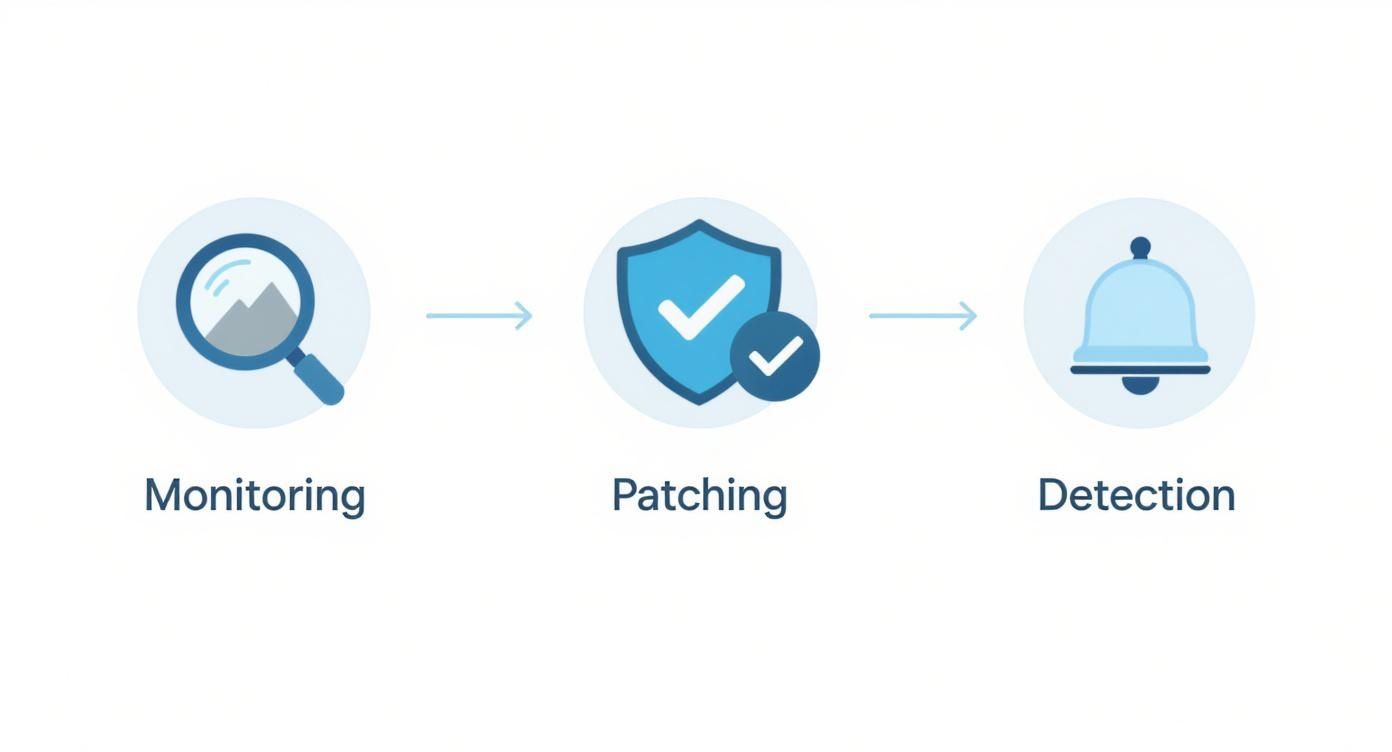
This three-part strategy—monitoring, patching, and detection—forms a protective shield around your business, ensuring that small glitches never become catastrophic failures.
The True Value of Uptime
Think about the systems you and your team rely on every day. Consistent uptime means deadlines are met, customers are served efficiently, and your business maintains momentum without the fear of a technical meltdown.
The goal isn't just to respond to emergencies faster. The goal is to create a technology environment where emergencies rarely happen in the first place.
By actively managing your network, we can spot performance issues and security risks before a major outage. Having the right network performance monitoring tools is a critical part of this strategy. It lets us see and solve problems long before your team even knows something is wrong. That foresight is what protects your most valuable asset: your time.
Strengthening Your Cybersecurity and Protecting Data

In today’s world, a “wait-for-the-hack” approach to cybersecurity is a gamble you can’t afford. This isn’t just about protecting computers; it's about safeguarding your company's financial data, your customers' private information, and the trust you’ve built in the community.
A single data breach can shatter your reputation, and for local businesses, that trust is everything. Proactive IT support is your best line of defense, turning cybersecurity from a panicked reaction into a steady, methodical process.
Building Your Digital Defenses
A solid defense isn't a single product. It's a multi-layered strategy that anticipates threats and closes security gaps before they can be exploited. This is especially true when one wrong click by an employee on a malicious email can open the door to a network-wide disaster.
Effective proactive cybersecurity means getting several key practices to work together:
- Continuous Security Monitoring: We act as your digital watchtower, keeping an eye on your network 24/7 for anything suspicious. This lets us spot and neutralize potential threats before they do real damage.
- Timely Software Patching: Cybercriminals love to exploit weaknesses in outdated software. We make sure all your systems get critical security updates, or "patches," the moment they’re available, locking the digital doors before anyone can try the handle.
- Employee Security Training: Your team is your first and most important line of defense. We provide training to help them recognize phishing scams and other tricks, turning a potential weak spot into a powerful security asset.
This constant vigilance is a core reason why IT support isn’t just for emergencies. A huge piece of this is building a robust security posture by understanding cybersecurity frameworks and applying them to your business.
Beyond Prevention: The Importance of a Recovery Plan
Even with the best defenses, no system is invincible. That's why a complete data protection strategy must include a plan for what happens after something goes wrong. What would you do if a ransomware attack locked up every single file your Salinas business owns?
A data breach isn’t just a technical problem—it's a business continuity crisis. Having a plan to recover quickly is just as important as having strong defenses.
This is where a bulletproof backup and recovery plan becomes non-negotiable. It’s your safety net, ensuring that even if the worst happens, you can restore your critical data and get your business back online with minimal disruption. For a closer look at what that entails, check out our post about Backup & Disaster Recovery.
Moving to Predictable IT Costs for a Better ROI
One of the biggest headaches for any small business owner is the unpredictable expense. A surprise invoice for thousands of dollars in emergency IT repairs can derail your budget, forcing you to pull cash away from growth areas like marketing or hiring a new team member.
This is where a proactive IT plan changes the game.
It transforms your technology spending from a volatile variable into a stable, fixed monthly expense. You’re no longer gambling against the odds of a server failure or ransomware attack. Instead, you have a clear, predictable line item you can count on, just like rent or payroll.
This approach aligns perfectly with our mission to provide enterprise-level IT at a price that makes sense for local Salinas businesses. You can budget with confidence and put your capital toward growing your business, not just patching it up when it breaks.
The Financial Advantage of Proactive Support
The return on investment (ROI) from shifting to a managed IT plan is significant and measurable. It’s not just about dodging surprise bills; it’s about making your entire operation more efficient and cost-effective.
By preventing problems before they start and extending the life of your equipment, proactive IT delivers a powerful return on your investment. It allows you to move from a defensive financial position to a strategic one.
Studies consistently show that proactive support can cost 40-60% less over a year compared to a reactive, break-fix model. Why? Because you eliminate expensive emergency call-out fees, slash costly downtime, and can even extend the lifespan of your hardware. You can find more data on how proactive strategies reduce costs and outages.
From Reactive Costs to Strategic Investments
Think for a moment about what that financial stability means for your business. Instead of hoping your aging server makes it through another quarter, you can strategically plan for future upgrades. Instead of reacting to costly emergencies, you can focus your resources on initiatives that drive revenue.
This shift empowers you to make smarter financial decisions. You can confidently invest in new tools, expand your team, or launch a new service, knowing your core technology is secure and reliable. That’s the real value of treating IT as a strategic investment. It proves that IT support isn’t just for emergencies—it’s a cornerstone of smart financial planning. You can see more on how proactive IT management delivers results.
Your Next Steps Toward Proactive IT Management
Seeing IT support as more than an emergency panic button is the first step toward building a more resilient, efficient business. When you shift from a reactive scramble to a proactive strategy, you’re not just buying tech—you’re protecting your operations, securing your data, and finally getting a handle on your budget. For businesses here in Monterey and Pacific Grove, it’s about future-proofing your success.
The path forward starts with an honest look at where you stand. You don't have to be a tech wizard to spot the warning signs. Are slow computers a daily frustration for your team? Do you worry about what would happen if you lost all your critical client data tomorrow? Naming these weak points is the key to finding the right local partner to fix them.
Taking Actionable Steps
Moving to a managed IT plan isn't a complicated process. It's designed to give you peace of mind. Your action plan is simple:
- Evaluate Your Current Risks: Get real about where your business is most vulnerable. Is it outdated hardware, inconsistent data backups, or a lack of employee cybersecurity training?
- Define Your Goals: What does a "win" look like for you? Maybe it’s zero downtime during your busiest season, or just the confidence that your client data is secure.
- Find a Local Partner: Look for an IT provider who understands the specific challenges of doing business in Monterey County and can build a plan that fits your budget.
What this actually means for you is that IT issues aren’t always visible—slow networks, security gaps, and outdated systems quietly drain performance until a full-blown outage occurs.
A huge part of this process is being ready for any scenario, and a strong defense always includes a clear recovery strategy. If you need guidance on creating one, feel free to use our business continuity plan template.
Want to see how much downtime could be costing your business? Let’s run a no-cost efficiency scan and show you the numbers.
Your Questions About Proactive IT, Answered
Making the jump from a reactive "break-fix" approach to a proactive one is a big shift, so it’s natural to have questions. We’ve heard just about all of them from business owners right here in the Monterey Bay area, so we’ve put together some straight-to-the-point answers.
Our goal is simple: to help you feel confident that your technology is actively driving your business forward, not just waiting for the next emergency.
Isn't Proactive IT Too Expensive for a Small Business?
That’s probably the biggest myth we hear. The reality is that proactive support is built around a predictable, flat monthly fee that, over a year, almost always costs less than a single major emergency repair.
When you factor in the high cost of unexpected downtime and the elimination of surprise invoices, the value becomes clear. It makes budgeting simple and turns IT from a random expense into a predictable investment.
We Don't Have Many IT Problems. Is This Really Necessary?
This is a fair question, especially when things seem to be running fine. But the most dangerous IT issues are the ones you can’t see—things like hidden security holes, a network that’s slowly getting less efficient, or compliance gaps that could lead to big fines.
These are the silent killers of productivity. They quietly slow your team down and dramatically increase your risk of a data breach, all without a single pop-up error message. Proactive support finds and fixes these underlying problems before they become a business-halting emergency.
What's the First Step to Making the Switch?
It all starts with a simple conversation. A good IT partner won’t try to sell you a one-size-fits-all package. Instead, they’ll start by taking the time to understand your business right here in Salinas—how your team works and what your goals are.
From there, we can run a quick assessment to find the hidden risks in your current setup. This lets us show you exactly how a proactive plan could be designed to fit your specific needs and budget. There's no pressure and no obligation, just clear information to help you make the right call for your company.
Want to see how much downtime could be costing your business? Let’s run a no-cost efficiency scan and show you the numbers.
Adaptive Information Systems
380 Main St, Salinas CA 93901 | 831-644-0300 | hello@adaptiveis.net