When you hear the term "digital transformation," it's easy to get lost in the jargon. But what is digital transformation really about? For your business in Salinas, it's about using modern technology to rethink how you operate and serve your customers.
It’s not just about buying the latest software. It's a shift in how you work—a smarter way to run your business, whether you're a farm in the Salinas Valley, a Carmel boutique, or a service provider in Monterey. At Adaptive, we believe in bringing enterprise-level IT to you at an affordable price, and this is the first step.
Understanding Digital Transformation Beyond The Buzzwords

So, what does digital transformation really mean for your business here in Monterey County? Let's cut through the tech-speak. Think of it less as a huge, scary project and more as a series of smart upgrades to your daily work using today's tools.
Imagine you manage a farm in the Salinas Valley. The old way meant walking the fields to check irrigation lines and guessing when to water. A digital approach would be to install smart sensors that check the soil and automatically water crops exactly when needed.
That simple change saves water, cuts costs, and can even improve your harvest. That, right there, is digital transformation in a nutshell. It’s about solving your real-world problems with practical technology.
From Manual Work To Smart Operations
At its core, digital transformation is about moving away from old, time-consuming tasks and using better digital options. This change isn't just for big corporations; it gives powerful advantages to local businesses like yours, too. For businesses of all sizes, understanding these core concepts is vital for growth, which is why guides on digital transformation for small businesses can be so helpful.
Here’s a simple breakdown of what that change looks like:
- Customer Interactions: You move from paper sign-up sheets and phone-only orders to an online booking system or a simple e-commerce website.
- Internal Operations: You switch from paper invoices and manual inventory counts to automated accounting software and digital tracking systems.
- Team Communication: You upgrade from scattered emails and sticky notes to one project management tool where everyone can work together.
The goal is to make your business faster, smarter, and more focused on your customers. It’s not about using technology just for the sake of it. You use it to hit specific goals, like reducing errors or making your customers happier.
Digital Transformation At a Glance
To make it even clearer, let's look at the "before and after." This table shows the real-world shift from old-school methods to a digitally transformed approach.
| The Old Way (Manual Processes) | The New Way (Digital Transformation) |
|---|---|
| Paper invoices and manual bookkeeping | Automated accounting software and digital payments |
| Sticky notes and verbal task assignments | Centralized project management tools |
| Phone calls and walk-ins for appointments | Online booking and scheduling systems |
| Guesswork based on past experience | Data-driven decisions from real-time analytics |
| In-person meetings for all collaboration | Video conferencing and cloud-based file sharing |
| Manual inventory counts | Automated stock tracking with sales integration |
Seeing the comparison side-by-side really shows how these changes can free up your time and make your work more accurate and efficient.
Connecting Your Systems For Maximum Impact
A key part of this process is making sure your new tools work together. You don't want a booking system that can't talk to your accounting software or an inventory tool that’s separate from your sales platform.
This is where ideas like system integration become so important. When your systems are connected, information flows automatically. This gets rid of repetitive data entry and gives you a complete, accurate picture of your business. If you're curious about how this works, you can learn more about what system integration is and why it’s a pillar of any successful transformation.
Ultimately, digital transformation is a smart business decision. It's about giving your Pacific Grove hotel, your Seaside cafe, or your Marina service company the same powerful tools that larger companies enjoy—but at a scale and price that makes sense for you.
Why Digital Transformation Matters for Your Business
So you're busy running your business—why should you care about a trend like "digital transformation"? The short answer is that it directly helps your bottom line. This isn't about chasing fads; it's about making real improvements that help your Monterey County business do more than just survive. It helps you grow.
This isn't just a game for big corporations. It's a vital toolkit for a Carmel boutique looking to get a handle on inventory, a Salinas farm wanting to improve efficiency, or a Pacific Grove hotel aiming to create guest experiences people rave about.

Boost Efficiency and Save Money
One of the first things you'll notice when you use digital tools is how much more efficient your work becomes. Just think about the daily tasks that eat up your time and money—manually writing invoices, tracking inventory on a clipboard, or scheduling employees with a paper calendar. It's a lot of work.
Digital transformation swaps these slow, error-prone methods for automated systems that just work. That means fewer mistakes, less time wasted on boring tasks, and more money staying in your pocket. Your team can finally focus on what really matters—like helping customers—instead of getting bogged down in paperwork.
Create Better Customer Experiences
In today's market, the experience you provide is everything. People expect convenience and personal service. Digital tools give you the power to meet—and even beat—those expectations, building the kind of loyalty that keeps people coming back.
Think about what you could offer:
- Online Booking Systems: You can let clients book appointments or make reservations whenever it suits them, day or night. No more missed business because they called after hours.
- Customer Relationship Management (CRM) Software: You can keep track of customer history and preferences. This helps you offer that personal touch that makes them feel valued.
- Digital Communication: You can send out automated email or text reminders for appointments. You'll see fewer no-shows and keep your customers happy.
When you make it easier for people to do business with you, you create a huge competitive advantage. This is especially true here on the Central Coast, where hospitality and service businesses live and die by their reputation.
The real risk isn’t trying something new; it’s standing still. While you stick to the old way of doing things, your competitors are getting faster, smarter, and more connected to their customers.
Make Smarter Business Decisions
Are you making big decisions based on gut feelings or last quarter's sales report? Digital transformation puts real-time data at your fingertips. This gives you a clear, up-to-the-minute picture of what's actually happening in your business.
Once your sales, inventory, and customer info are all connected, you can spot trends as they happen. You can see which products are hot, pinpoint your busiest hours, and get a much better feel for what your customers truly want. This data-driven approach takes the guesswork out of the equation, helping you make smart choices that lead to real growth.
There's a reason global spending on digital transformation is projected to hit $3.9 trillion by 2027. Businesses everywhere see this not as a cost, but as a critical investment in their future.
Staying Competitive in a Changing Market
At the end of the day, what is digital transformation really about? It's about future-proofing your business. Adopting modern tools like cloud computing isn't a luxury anymore—it's essential for running a flexible and strong operation. Moving to the cloud gives you better security, access from anywhere, and the ability to scale up or down as your needs change.
If you are wondering who provides cloud services in Salinas, know that local expertise is right here to make the switch feel less intimidating and more affordable for you.
By becoming more efficient, delighting your customers, and making smarter decisions, you put your business in a position to lead, not just struggle to keep up.
The Four Pillars of a Successful Transformation
Thinking about "digital transformation" can feel like a huge, confusing idea. Where do you even start? It's a lot like building a house—you can't just throw up walls and a roof. You need a solid foundation with strong supports.
For your business, that foundation rests on four key pillars. When they work together, they create real, lasting change. Breaking it down this way turns a big, scary project into a clear, manageable plan.
This diagram shows how a solid strategy is the starting point, but it's the right technology and a great company culture that truly bring it to life.
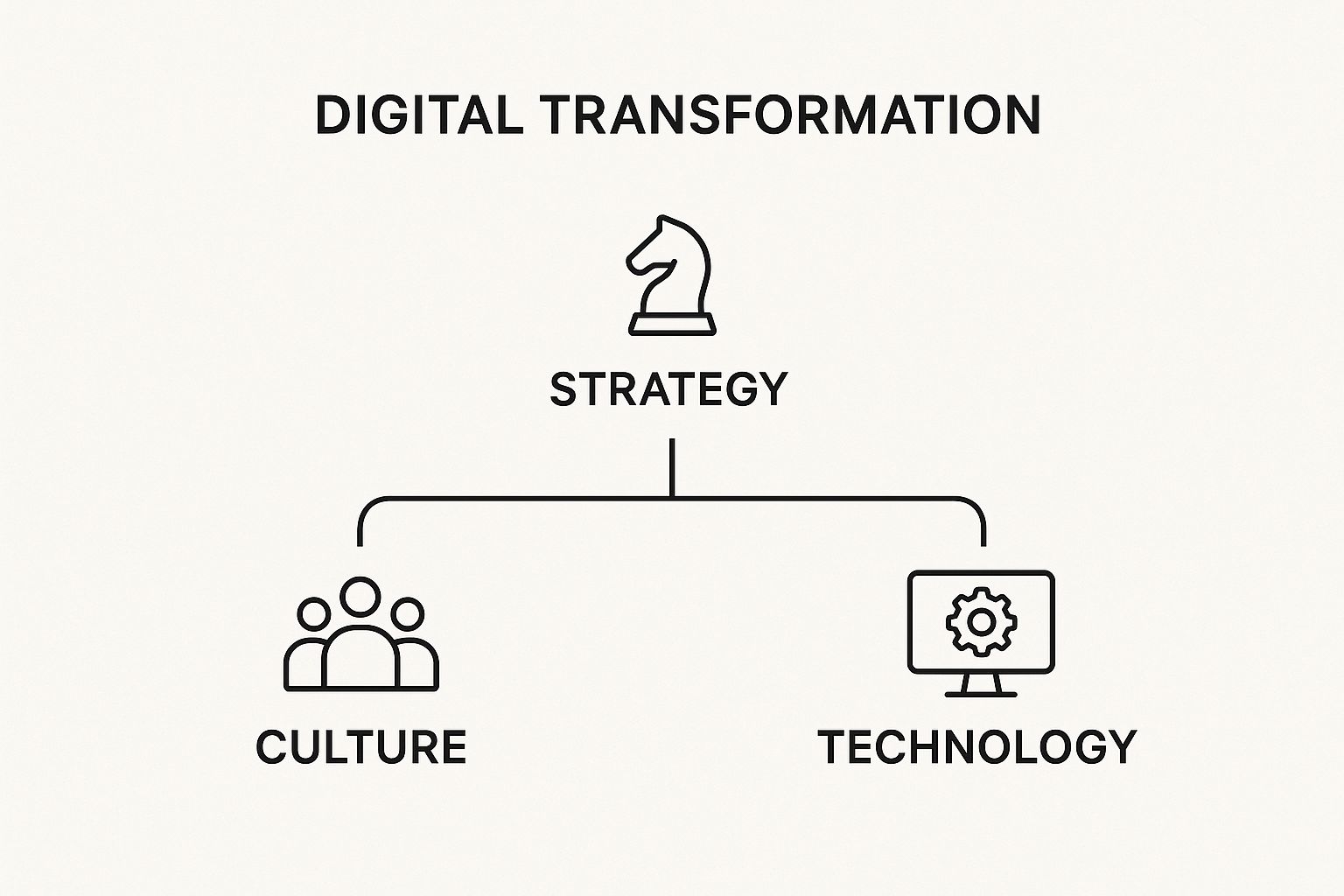
As you can see, technology alone isn't the answer. Your strategy and your team are just as important to getting this right.
1. Modernizing Your Technology
The first pillar is all about the tools you use every day. This isn't about chasing every new gadget. It's about choosing technology that makes your business more flexible, efficient, and—most importantly—secure. For most businesses, this journey starts with the cloud.
For a local Monterey Bay business, this could look like:
- Switching to cloud-based software: Using tools like Microsoft 365 or cloud accounting software means your team can access files and work together from anywhere, whether they’re at the office in Salinas or working from home.
- Upgrading your network: Your network is the digital backbone of your company. A modern, secure network is a must-have for protecting your data from threats. To get a handle on the basics, our guide on cyber security 101 is a great place to start.
- Using VoIP phone systems: Moving your phones to the internet can seriously cut costs and add powerful features like sending calls to mobile devices. You'll never miss an important customer call again.
Getting your tech right is the foundation for everything else you do.
2. Automating Your Processes
Pillar number two is about finding those repetitive, manual tasks and letting technology take over. Automation is your secret weapon for freeing up your team's time and reducing human error. Every minute your staff saves on busywork is a minute they can spend helping your business grow.
Think about a hospitality business in Monterey that still manually enters online bookings into a separate calendar. It's slow and a perfect recipe for double-booking.
By automating this, the booking system could instantly update the main calendar, send a confirmation email to the guest, and even schedule a reminder before their stay. That one change saves time, prevents expensive mistakes, and makes for a much happier guest.
Automation isn’t about replacing your people. It’s about letting them focus on what they do best.
3. Leveraging Your Data
Every single day, your business creates tons of data—from sales numbers and customer comments to website traffic. The third pillar is all about turning that raw information into your best strategic tool. It’s about ditching the guesswork and making decisions based on what the numbers actually say.
A retail shop in Pacific Grove, for example, could analyze its sales data to discover its best-selling products, its busiest times of day, or which sales actually bring people in the door.
That kind of information is pure gold. You can use it to perfect your staffing schedules, manage inventory better, and launch marketing campaigns that actually work.
4. Elevating Your Customer Experience
The fourth and final pillar ties it all together by putting the focus on your customer. All the tech upgrades, automated workflows, and data you collect should lead to one thing: making it easier and more enjoyable for people to do business with you.
This could mean things like:
- A user-friendly website: Can your customers easily find what they need, make a purchase, or book an appointment? Your site has to be simple.
- Personalized communication: Using a CRM system to remember customer preferences lets you send them offers and updates that are actually relevant to them.
- Faster response times: Using tools to answer customer questions quickly shows them you respect their time.
When you use technology to improve every interaction, you’re not just making a sale. You're building strong relationships and turning casual buyers into your biggest fans.
Real-World Examples of Digital Transformation
Theory is great, but seeing how digital transformation works in the real world is what makes it all click. Let's look at a few practical examples of how businesses right here in our community can use technology to make a real difference.
These aren't huge, multi-million dollar projects. They’re smart, targeted changes that solve everyday problems, save money, and create happier customers. The goal is to show you that a successful transformation is built on small, doable steps—not one giant, scary leap.

Example 1: The Pacific Grove Bed and Breakfast
Picture a charming B&B in Pacific Grove still running on a paper calendar and phone calls for every booking. The owner is constantly confirming reservations and hoping they don't double-book a room. It's a stressful system that takes time away from the guests.
Now, let's add a little digital transformation.
- The Change: They set up a simple, affordable online booking system on their website.
- The Impact: Guests can now see what's available and book their stay 24/7, whenever it's convenient for them. The system automatically sends confirmation emails and reminders, which cuts down on no-shows. The owner gets back 5-10 hours every week, time they now use to make guest stays special and build a base of loyal, repeat customers.
This is a perfect example of what digital transformation is really about: you use the right tool to automate a boring task, improve the customer experience, and get back your most valuable asset—your time.
Example 2: The Salinas Valley Agricultural Supplier
Think about an ag supplier in the Salinas Valley trying to manage a huge inventory with spreadsheets. They guess demand based on last year's sales. This often leads to having too much stock or running out of parts during busy seasons.
A digital approach completely changes the game for you.
The real power of digital transformation comes from connecting different parts of your business. When your sales data can "talk" to your inventory system, you stop guessing and start knowing.
They could bring in a modern inventory management system that connects directly with their sales software.
- The Change: The new software tracks sales as they happen and uses that real-time data to predict future demand.
- The Impact: The supplier can now order stock more accurately. This reduces waste and frees up money that was tied up in inventory. They can plan for seasonal rushes, making sure local farms get what they need, right when they need it. This data-driven approach makes them a reliable partner in the local agriculture community.
Example 3: The Marina-Based Service Company
Finally, let’s look at a service company in Marina—maybe an HVAC or plumbing business—that still gives technicians a clipboard of paper work orders. Invoicing doesn't happen until the tech gets back to the office, often days later. This slows down cash flow and makes scheduling a nightmare.
This is exactly where mobile tech can make a huge impact for you.
- The Change: The company gives its technicians tablets with a simple mobile app. Now, techs can see their daily schedule, pull up customer history, and create digital invoices right on the spot.
- The Impact: Efficiency soars. The office can update schedules instantly, and technicians have all the information they need in their hands. Best of all, they can create an invoice and take payment on-site, which drastically improves cash flow. Customers get quicker service and a much more professional experience.
These stories show that digital transformation is within reach for any business. We've seen firsthand how these kinds of smart changes can help local companies thrive—you can even read some of their stories in our client case studies. The key is to start small, focus on your biggest problems first, and find a partner who truly understands your goals.
How to Overcome Common Transformation Hurdles
Going all-in on a digital transformation is one of the smartest moves you can make, but let’s be real—it’s not always a smooth ride. You might hit a few bumps. The good news? Every one of these challenges has a practical solution.
You don't need a Silicon Valley budget or a huge IT department to make this work. It's all about having a smart plan and the right partner to guide you. This is about making steady progress, not trying to be perfect overnight.
Tackling Tight Budgets
For most small business owners in Monterey County, the first question is always, "How can I afford this?" You see the potential, but the price tag feels like a roadblock. The key is to stop thinking of it as one giant, expensive project.
Instead, you should look at it as a series of small, smart upgrades. A step-by-step approach lets you:
- Start small, aim for high impact: Find the one task that causes the most headaches or wastes the most time. Is it your manual invoicing? A clunky scheduling system? Focus your first investment right there.
- Get a quick win: A well-chosen first project should start paying for itself almost immediately, either through time saved or new sales. That early success proves the idea and can even help fund the next step.
- Scale at your own speed: You are in complete control. As your business grows and your budget allows, you can move on to the next item on your list.
This approach is exactly what we do—we bring enterprise-level IT to local SMBs at a price that actually works for you. You get the benefits without the huge upfront cost.
Getting Your Team On Board
The next common hurdle isn't about the tech; it's about your people. Your team is used to doing things a certain way, and just hearing "new software" can cause some pushback. They might worry it’ll be too complex or, worse, make their jobs unnecessary.
Managing this change successfully just comes down to clear communication and getting everyone involved.
The fastest way to turn skeptics into supporters is by showing them how the new tools will make their jobs easier, not harder. Frame it as a way to get rid of their most boring tasks so they can focus on more interesting work.
Bring your team into the process from the start. Ask them what their biggest daily frustrations are. When you’re ready to pick a new tool, let them test out a few options. When people feel like they’re part of the decision, they become invested in its success. From there, some simple, hands-on training is all it takes to turn fear into excitement.
Navigating Knowledge Gaps and Security Worries
You’re an expert in your field—whether that's agriculture, hospitality, or professional services—not an IT specialist. It’s perfectly normal to feel like you don’t have the technical skills to manage new systems or, more importantly, keep them safe from cyber threats.
This is exactly where partnering with a local expert makes all the difference. You shouldn’t have to become a cybersecurity guru. Your job is to focus on your business goals; our job is to handle the tech. A good IT partner fills in those knowledge gaps and makes sure your digital foundation is solid and secure.
Unfortunately, a lot of transformation projects fail because of poor planning. A global study found that the success rate for these projects is only around 35%. But that same research showed that companies with expert help and good planning can triple their chances of success. It proves that how you implement change is way more important than how much you spend. You can read the full findings about transformation challenges to see just how critical a well-managed process is.
With the right strategy, these common problems become simple stepping stones on your path to building a more efficient, competitive, and successful business.
Your First Steps Toward Digital Transformation
Knowing what digital transformation is feels different than actually starting it. That first move can feel like a huge leap, but here’s the good news: you don’t need a massive budget or a complex plan to get going. A successful transformation is really just a series of small, practical steps.
Think of this as your roadmap. It’s a clear, manageable guide to taking action. We'll break the whole process down into four simple steps you can start thinking about today, turning that big idea into a real plan for your Salinas business.
Step 1: Assess Where You Are Now
Before you can map out a route, you need to know where you're starting from. This first step is all about taking an honest look at where your business is right now—finding your biggest problems and your best opportunities. You don't need a formal audit; just start by asking yourself and your team a few simple questions.
- What tasks take up the most time? Think about the repetitive, manual work that slows everyone down, like building employee schedules from scratch or processing every invoice by hand.
- Where do the costliest mistakes happen? Is it double-booked appointments? Inventory errors that lead to empty shelves? Missed follow-ups with potential customers?
- What frustrates your customers the most? Are they stuck on hold? Is your website hard to use? Is service just plain slow?
This simple exercise gives you a powerful starting point. It helps you focus on the exact areas where a small tech change could deliver the biggest and fastest results.
Step 2: Define Your Goals
Once you’ve found the challenges, the next step is to define what success looks like for you. Vague goals like "be more digital" won't get you anywhere. You need specific, measurable results that connect directly to what you’re trying to achieve as a business.
For example, instead of a generic goal, get focused:
- Weak Goal: "We want to improve our customer service."
- Strong Goal: "We want to reduce customer phone wait times by 50% by setting up an online booking system."
Your goals should be clear and simple. A great goal isn't about the technology itself; it's about the business result you want to achieve with the technology.
This kind of clarity is key. It gives you a clear target to aim for, makes it easy to measure if your efforts are working, and keeps your entire team moving in the same direction.
Step 3: Start Small With a Pilot Project
Now it’s time for action. But that doesn’t mean you should try to change your entire operation at once. The smartest way to begin is with a small, manageable pilot project. Choose one of the high-impact problems you found in step one and find a specific tool to solve it.
For instance, if manual invoicing is your biggest time-waster, your pilot project could be as simple as trying a cloud-based accounting tool for just one part of your business. This approach is powerful because it lets you test the waters with very little risk and cost.
A successful pilot project proves the concept to you and your team. It builds confidence, lets you work out any problems on a small scale, and delivers a quick win that builds momentum for what's next.
Step 4: Choose the Right Partner
You don’t have to—and shouldn't—go on this journey alone. In fact, trying to do it all yourself is one of the quickest ways to get overwhelmed and give up. Finding the right technology partner is probably the most important step in making sure your digital transformation succeeds.
You're the expert on your business; a good partner is the expert on the technology that can help it grow. Look for a local consultant who takes the time to truly understand your specific challenges and goals—someone who feels more like a part of your team than just a vendor.
A great partner translates your business needs into a practical, affordable technology plan. For local businesses looking for guidance, understanding the value of business technology consulting is the perfect first move toward finding that trusted advisor. At Adaptive Information Systems, we're committed to helping you take these first steps and building a future-ready business, right here in Monterey County.
Still Have Questions? We Have Answers.
Here are a few common questions we hear from local business owners just like you.
"This Sounds Expensive. What’s the Real Cost for a Small Business?"
It's almost certainly more affordable than you think. A smart digital transformation isn't about writing one giant check for you. The whole point is to take it one step at a time.
We'll help you find a small, high-impact project that fits your current budget. Once you see the return on that investment, we can build from there. It's about smart, steady growth, not a huge upfront expense.
"How Do I Get My Team On Board With All This New Technology?"
This is a big one, and you're right to ask. Getting your employees on board is everything. The secret isn't forcing it on them; it's showing them what's in it for them.
We focus on clear communication that shows how new tools make their jobs easier, not more complex. By involving your team in the process and providing simple, hands-on training, we can turn that initial hesitation into real excitement.
"Do I Need to Be a Tech Whiz to Pull This Off?"
Absolutely not. You're the expert on your business, and that's all that matters.
Our job as your IT partner is to handle the technical side. We listen to your goals—what you want to achieve for your company—and then turn that vision into a simple, effective technology plan. You bring the vision; we'll bring the tools to make it happen.
Ready to see what a digital transformation could look like for your business? The team at Adaptive Information Systems provides the kind of enterprise-level IT strategy big companies use, but at a price that works for businesses right here in the Monterey Bay area.
Let's build a smarter, more efficient future for your company, together. Contact us today to get started.
Adaptive Information Systems
380 Main St, Salinas CA 93901 | 831-644-0300 | hello@adaptiveis.net