
You should expect a great IT support company to be a true partner in your business. They should focus on preventing problems, not just fixing things after they break. This means you get 24/7 monitoring, clear communication, and a team that genuinely wants your Salinas business to run smoothly and securely. When you have a reliable partner, you can stop worrying about technology and focus on what you do best.
What a Good IT Company Should Be Doing for You
If you run a business here in Salinas or anywhere in Monterey County, you know how frustrating bad tech support can be. A domain renewal gets missed, a simple helpdesk ticket takes days to solve, or you just feel blindsided by a problem that should have been caught earlier. When tech support causes more stress than it solves, people naturally ask: what should a good IT company actually be doing for me?
The truth is, many businesses are left vulnerable. Data shows that only 47% of small businesses have a formal security plan, often because they feel they can’t afford the right tools. When you combine that with an IT provider who doesn’t communicate clearly, things go wrong fast. Bad support costs you real time, money, and team morale.
The Common Misstep Business Owners Make
Choosing an IT provider based only on price or a single service is a huge mistake. Many IT companies sell a “set it and forget it” package. You assume that once things like your data backups or user access are in place, they are being managed. But without accountability and proactive monitoring, important things like DNS, backups, and user access can fall apart, leaving your business exposed.
A great IT partner should feel like an extension of your team. They’re the ones catching issues before you even know they exist, and they're the people your staff actually feel comfortable calling when there’s a problem. Their real job is to prevent fires, not just put them out.
For businesses in our local agriculture or hospitality industries, this proactive approach is essential. Instead of just reacting to emergencies, a true partner like Adaptive Information Systems focuses on 24/7 monitoring, real-time alerts, and a human-led helpdesk ready to help. Every business owner needs to understand the real value and core offerings of reliable IT support for small business to make sure their company is both protected and positioned for growth.
As we cover in our guide on small business IT support, choosing the right partner isn't just an expense—it's a strategic decision that protects your time, your money, and your team’s sanity.
Now that we’ve set the stage, let’s look at a quick side-by-side comparison. It can be tough to spot the difference between a great provider and a mediocre one until it’s too late. This table breaks down what a truly reliable partner delivers versus the red flags you should be watching out for.
Reliable vs Unreliable IT Support At a Glance
| Core Expectation | What Reliable IT Support Delivers | Red Flags from Unreliable Providers |
|---|---|---|
| Problem Handling | Proactively monitors systems 24/7 to prevent issues before they impact your business. | Only responds after something breaks, leaving you to deal with downtime and frustration. |
| Communication | Provides clear, jargon-free updates and regular strategic reviews to align with your goals. | Communication is confusing, full of technical jargon, or only happens when there’s a bill. |
| Security | Implements a layered security strategy, including employee training and compliance checks. | Sells you a single piece of software and calls it "security," with no ongoing management. |
| Billing | Offers transparent, predictable pricing models (like flat-rate) with no surprise fees. | Hits you with unexpected charges for "out-of-scope" work that should have been included. |
| Partnership | Acts as a strategic advisor, helping you leverage technology to improve and grow. | Views the relationship as purely transactional—they fix a ticket and disappear. |
This table gives you a clear mental checklist. A good partner is proactive, communicative, and strategic. An unreliable one is reactive, confusing, and only focused on the transaction. Keeping these differences in mind will help you ask the right questions as you evaluate potential IT support companies.
1. Core Services: The Non-Negotiables

When you're vetting an IT support company, there's a baseline of services that should be part of any comprehensive package. Think of these as the foundation of your entire tech infrastructure—if any of these are missing, your business is left with significant gaps.
Here are the absolute essentials you should expect:
- 24/7 Network Monitoring and Management: This is the heart of proactive IT. Your provider should be using sophisticated tools to watch over your network, servers, and workstations around the clock. They should be able to spot performance issues, security threats, or potential hardware failures long before they cause an outage.
- Help Desk Support: When an employee can't log in or a critical application crashes, you need immediate access to competent help. A reliable provider offers a responsive help desk staffed by real technicians who can troubleshoot issues via phone, email, or remote access. It’s not just about logging tickets; it’s about resolving them quickly.
- Data Backup and Disaster Recovery (BDR): This is your ultimate safety net. Your IT partner must implement a robust backup solution that automatically saves your critical data. But it’s not enough to just back it up—they need a clear, tested disaster recovery plan to restore your operations quickly after a hardware failure, cyberattack, or natural disaster.
- Cybersecurity Services: In today's world, this is non-negotiable. A good IT company will provide a multi-layered security strategy. This goes beyond basic antivirus and includes a business-grade firewall, email filtering to block phishing attacks, and regular security patching for all your software and systems.
- Vendor Management: You shouldn't have to spend your time on the phone with your internet provider or software company. Your IT partner should handle that for you, acting as the technical liaison to resolve issues with third-party vendors so you can focus on running your business.
Moving Beyond Break-Fix with Proactive Management
Relying on the old "break-fix" IT support model is like only taking your car to the mechanic after it's broken down on Highway 101. It’s stressful, disruptive, and almost always ends up costing you more in the long run. The single most important expectation you should have for an IT partner is that they get you out of this reactive cycle and into a state of proactive management.
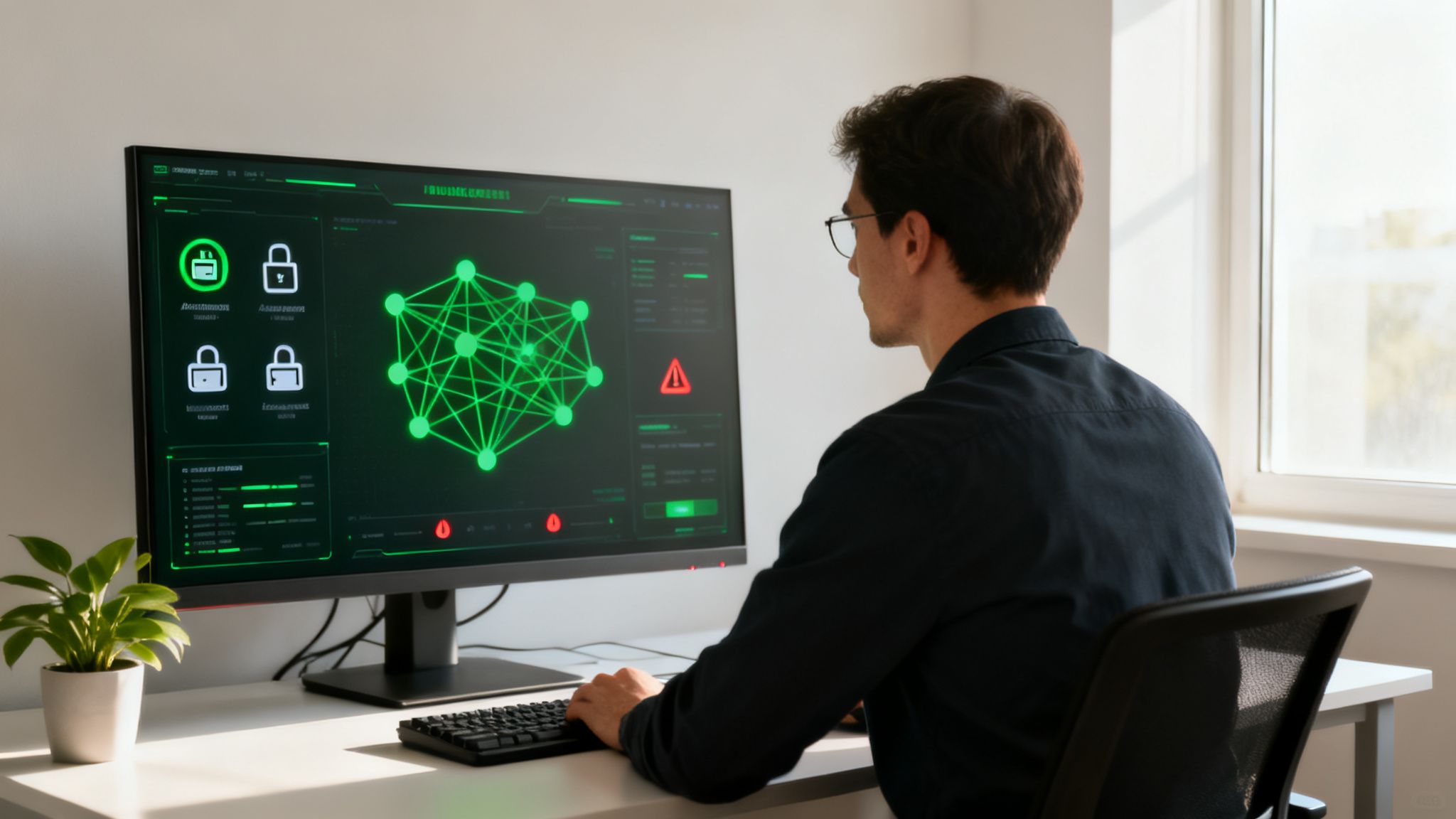
A top-tier IT support company isn't just sitting by the phone, waiting for you to call with a problem. They're using sophisticated 24/7 monitoring tools to keep a constant, vigilant watch over your entire technology environment. They should be the first to know if a server is showing early signs of failure or if your network performance is starting to dip.
This whole approach is about handling all the critical background tasks that keep your business running smoothly, so you rarely have to give them a second thought.
What Proactive Management Looks Like
So, what does this actually mean for your business here in Monterey County? It’s not just a buzzword; it’s a tangible set of actions designed to stop problems before they ever start. Real proactive management includes things like:
- Automated System Alerts: Your provider should get instant notifications for potential issues, like a data backup failing overnight or unusual network traffic that could signal a brewing security threat.
- Scheduled Maintenance: They’ll handle all the essential updates and patches for your software and systems, but they'll do it during off-hours to keep everything secure and efficient without interrupting your workday.
- Active Resource Management: They actively monitor your server capacity, network bandwidth, and even workstation health, allowing them to recommend upgrades or adjustments before your team starts experiencing frustrating slowdowns.
The goal of proactive support is simple: to make your technology so reliable that you rarely have to think about it. It transforms your IT from a source of recurring headaches into a stable platform for growth.
When you’re vetting IT support companies, you should be looking for robust uptime guarantees backed by powerful monitoring. For small businesses in the Monterey Bay Area, especially those in agriculture or finance, this isn't a luxury—it's critical. Leading providers are now hitting average uptime rates well over 99.9%, which translates to less than 45 minutes of potential downtime per system, per year. Businesses that make the switch to a proactive provider typically see their downtime slashed by 40-60%, which directly boosts team productivity.
At Adaptive IS, we live and breathe this approach. We handle the critical background tasks like data backups, software updates, and security monitoring so you’re never caught off guard. This hands-on, forward-thinking strategy is the core of effective managed IT support and is what separates a true partner from a simple repair service.
Getting Help From People Who Actually Want to Help
Let’s be honest, technology can feel cold and complicated. But getting support for it absolutely shouldn't. Beyond the servers, software, and cables, what you're really looking for is a human touch from your IT support partner. This boils down to having a helpdesk your employees actually feel comfortable calling—one staffed with real people trained to solve problems, not just log a ticket and pass you down the line.
When a team member runs into an issue, the last thing they need is to feel like they’re bothering someone or be met with a wall of confusing jargon. A great IT provider knows this and invests heavily in their team's communication skills. They get the pressures local Salinas businesses face and can walk you through a solution with clarity, patience, and a genuine desire to see you get back to work. This people-first approach is what turns a frustrating IT hiccup into a productive, positive experience.
What Great Human Support Actually Looks Like
The quality of a helpdesk is a direct reflection of the IT company itself. It’s the front line, the place your team will interact with your provider most often, so that experience has to be solid. Here’s what separates the good from the great:
- First-Contact Resolution: The number one goal of any support call should be to solve the problem right then and there. Technicians should have the skill and authority to handle most common issues without needing to escalate the ticket. This saves everyone an incredible amount of time.
- Clear Communication: A good technician speaks in plain English. They avoid technical jargon whenever possible and can explain what went wrong and how they fixed it in a way anyone can understand.
- Multiple Ways to Get Help: Your team should be able to reach out in whatever way is most convenient. That means a phone number for urgent issues, an email for lower-priority requests, and usually a client portal where they can submit and track the progress of their tickets.
A truly reliable IT partner offers more than just technical skill; they offer peace of mind. You’re not just buying a service; you’re gaining a support system staffed by professionals who are accountable, empathetic, and genuinely invested in your success.
Finally, this commitment to great service needs to be more than just a promise—it has to be backed by a formal Service Level Agreement (SLA). An SLA is a straightforward contract that defines guaranteed response and resolution times, so you know exactly what to expect. It holds your provider accountable and ensures that when you need help, you get it fast. For a deeper dive on this, check out our guide on IT help desk best practices.
Expecting Cybersecurity as a Standard, Not an Add-On
These days, cybersecurity can't be some optional line item you have to ask for. You should expect any IT support company worth its salt to build security into the very foundation of everything they do. For a true partner, protecting your business is a core responsibility, not an afterthought.
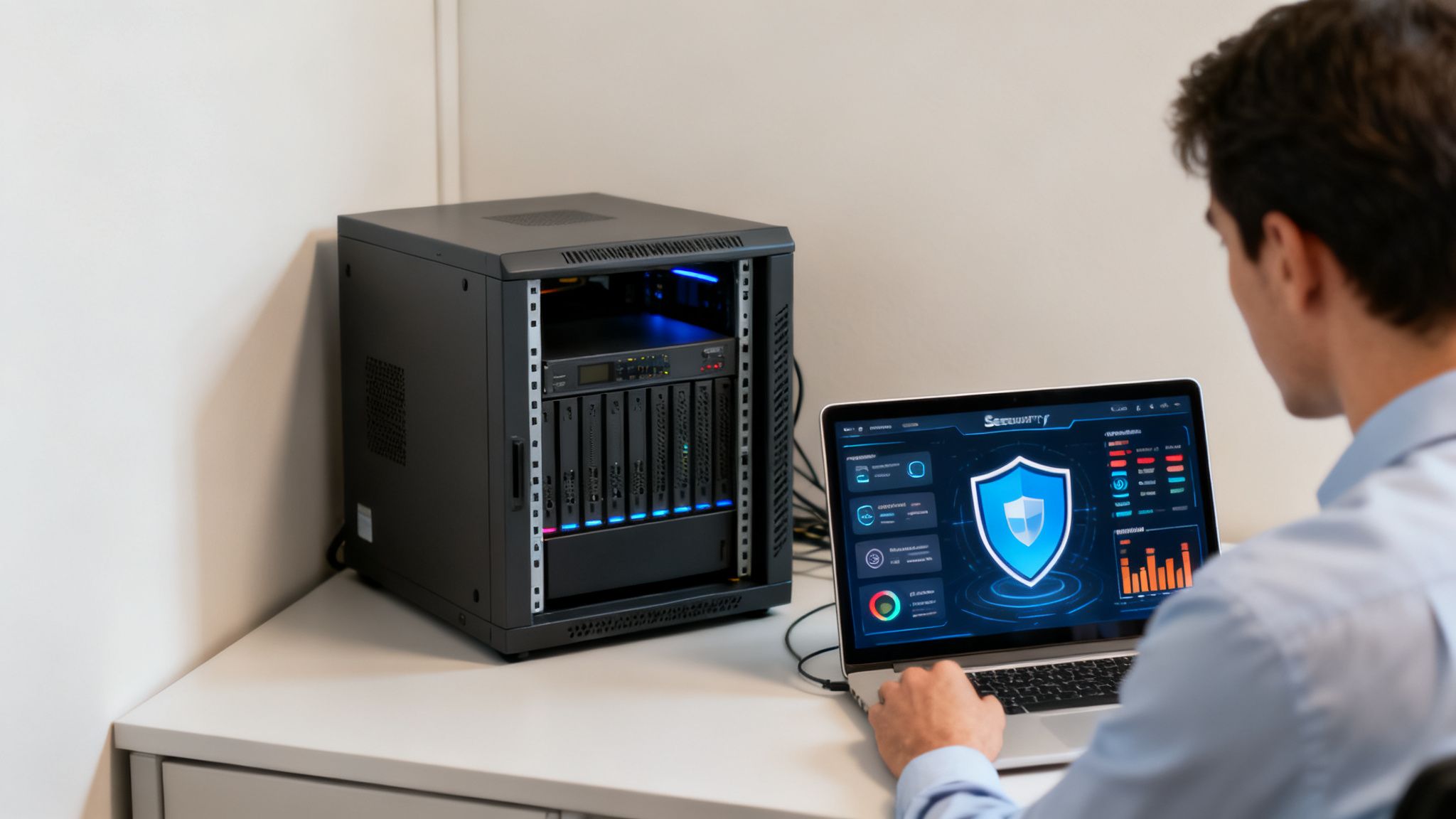
With nearly half of all small businesses admitting they don't have a formal security plan, a reliable IT partner is the one who steps in to bridge that critical gap. They should be your first and strongest line of defense, building a multi-layered security strategy that protects you from every angle.
Beyond Basic Antivirus
A single piece of software isn't a security strategy. Real protection involves multiple, reinforcing layers that work together to keep threats out. Think of it like securing a building: you need strong locks, an alarm system, and security cameras—not just one or the other.
This is what you should expect as a minimum standard:
- A Business-Grade Firewall: This acts as a digital gatekeeper for your network. It actively monitors all the traffic coming in and going out, blocking malicious activity before it ever gets a chance to reach your computers.
- Proactive Email Filtering: Since most cyberattacks start with a phishing email, your IT partner must use advanced filtering to catch spam, malware, and fraudulent messages before they land in your team’s inboxes.
- Regular Vulnerability Scanning: A good provider doesn't just sit back and wait for an attack. They should be actively scanning your systems for security weaknesses and patching them before cybercriminals can find and exploit them.
A reliable IT partner actively works to prevent breaches, not just react to them. Their goal is to create a secure environment where your business can operate with confidence, knowing you are protected around the clock.
Compliance for Local Industries
For many of us here in the Salinas Valley—especially in finance, healthcare, or agriculture—security is also about meeting strict regulatory requirements. Your IT provider should understand these rules inside and out and help you navigate them. Whether it’s HIPAA for healthcare or PCI for credit card processing, they must have the expertise to manage your compliance needs.
This is a hallmark of a premier IT support company—their ability to deliver enterprise-level protection. A top-tier firm will have compliance rates above 95% and threat detection that neutralizes 98% of attacks before they can do harm. For Monterey Bay businesses in regulated fields, this level of robust protection is non-negotiable.
If you’re ready to move beyond just the basics, we’ve put together a foundational guide to get you started. You can learn more by checking out our article on Cyber Security 101.
Receiving Strategic Guidance and Clear Reporting
A truly reliable IT support company does more than just fix things when they break; they actively help your business move forward. You should expect your IT partner to be a strategic consultant, someone who understands your goals and helps you use technology to get there.
This isn't just about solving tickets—it's about steering the ship.
This strategic relationship is built on clear communication and accountability. Your provider should schedule regular meetings, like quarterly business reviews, to discuss what’s working, what isn’t, and where you’re headed. These sessions are your chance to align your technology budget with your business objectives, ensuring every dollar you spend is a smart investment in your future.
Moving from Technicians to Strategic Partners
A partner looks beyond the immediate problem to see the bigger picture. Whether you run a startup in Seaside or a well-established firm in Carmel, your IT provider’s recommendations should be aimed at improving efficiency, reducing long-term costs, and giving you a competitive edge.
This means you should receive transparent, easy-to-understand reports that summarize:
- System Health and Performance: A clear overview of how your network, servers, and devices are performing, highlighting any potential bottlenecks.
- Security Posture: An honest assessment of your cybersecurity readiness, including blocked threats, patch status, and any vulnerabilities that need attention.
- Support Trends: Analysis of helpdesk tickets to identify recurring issues that might point to a need for better training or a technology upgrade.
Beyond immediate problem-solving, a truly reliable IT partner offers strategic guidance to help you optimize your operations, which can include advice on how to build a knowledge base to improve self-service and internal efficiency.
Your IT reports shouldn't be a confusing jumble of technical data. They should tell a clear story about the value your IT investment is delivering and provide actionable insights that help you make smarter business decisions.
Ultimately, you’re looking for a partner who helps you understand the why behind their recommendations. They should be able to explain how a specific upgrade or new piece of software will directly support your business goals. For a deeper look into what data to focus on, you can learn more about key information technology KPIs and how they reflect business health.
This level of guidance is what transforms IT from a necessary expense into a powerful driver of growth.
How to Choose the Right IT Partner in Monterey County
Knowing what a good IT provider should do is step one. Now, let’s turn those expectations into a practical vetting process. You need to look for a provider who prioritizes proactive monitoring and people-first support. They should catch issues before you do—and be someone your team wants to call when there’s a problem.
For any business here in Salinas, Monterey, or the surrounding communities, the right provider will feel like an extension of your own team. They get the local business landscape, from our vibrant agriculture and hospitality sectors to professional services, and they're personally invested in your success. A cheap, "set it and forget it" provider might look good on paper, but the real cost shows up when things inevitably go wrong. Without real accountability, critical tasks like managing your backups, controlling who has access to what data, and keeping your domain secure can fall through the cracks.
From Vetting to Partnership
To sidestep that common pitfall, you have to ask direct questions that slice right through the sales pitch. You're looking for a provider who is obsessed with proactive monitoring and people-first support. They should be the ones catching problems before you do—and they should be the team your staff actually feels comfortable calling when something isn’t working.
Here are a few critical questions to get you started with any potential IT support company:
- Proactive Monitoring: "Can you show me what specific tools you use to monitor our systems 24/7? What kind of issues trigger an alert for your team before we even notice a problem?"
- Response Times: "What are your guaranteed response times in your Service Level Agreement (SLA)? I want to see the numbers for both critical and non-critical issues."
- Staff Training: "How do you train your helpdesk technicians? What's your process for ensuring they can resolve problems on the first call instead of just creating a ticket and escalating it?"
- Onboarding Process: "Walk me through your client onboarding process. How do you guarantee a smooth transition with minimal disruption to our daily operations?"
The decision tree below really gets to the heart of the matter. Is a potential IT partner strategic, setting you up for growth? Or are they just reactive, which ultimately leads to stagnation?
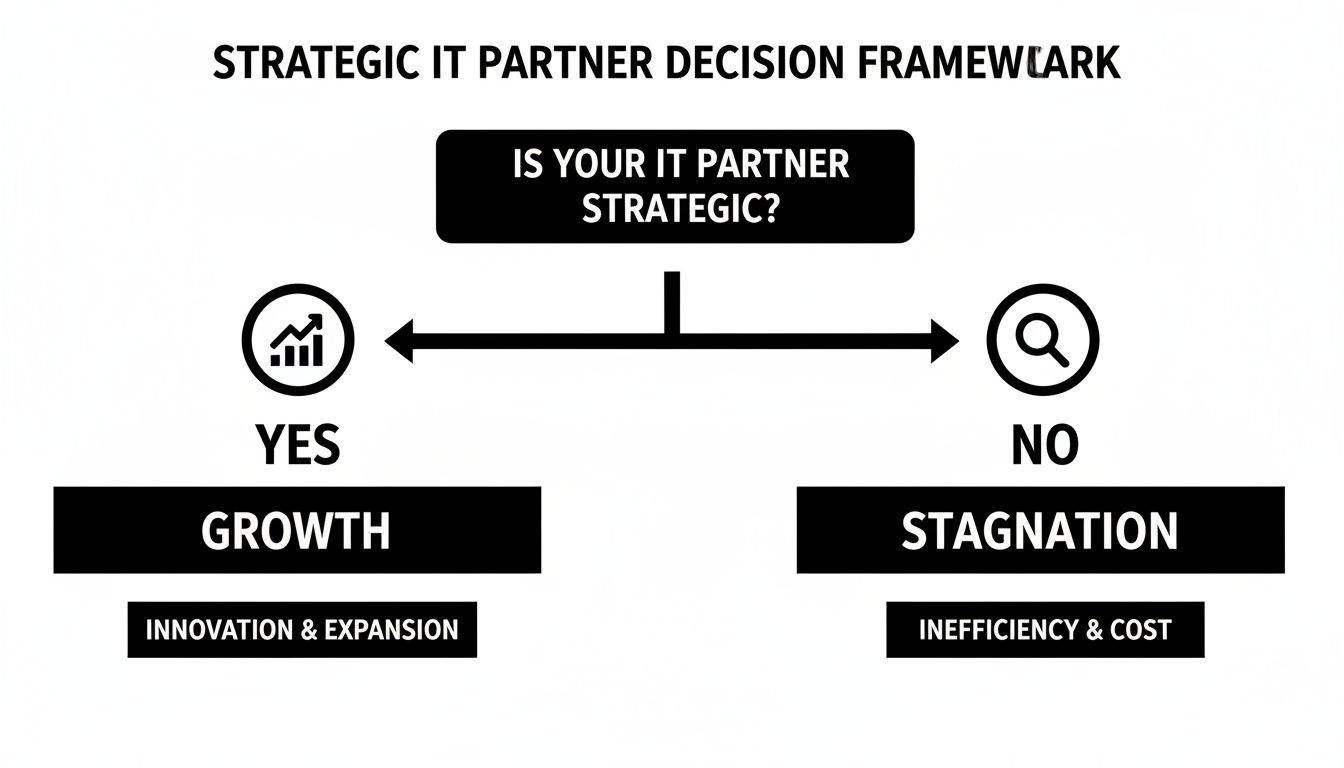
This framework is a great way to visualize how a strategic partner actively fuels your business growth, while a non-strategic one can quietly hold you back.
At Adaptive Information Systems, we set ourselves apart with relentless 24/7 monitoring, real-time alerts, and human support that’s genuinely helpful, not frustrating. We train our helpdesk to solve problems, not just escalate them. And we proactively manage your DNS, backups, and critical renewals so your business is never left exposed. If your business is in Salinas or the Monterey Bay Area and you’re tired of guessing what your IT company is actually doing, let's talk. We believe in earning your trust by preventing problems, not just reacting to them.
Adaptive Information Systems
380 Main St, Salinas CA 93901 | 831-644-0300 | hello@adaptiveis.net
Got Questions About IT Support?
Even when you know what to look for, picking the right IT partner is a big decision. Here are some clear, no-nonsense answers to the questions we hear most often from business owners right here in the Monterey Bay Area.
How Much Should I Expect to Pay for Reliable IT Support?
Most IT support pricing is a flat monthly fee, usually based on how many users or devices you have. It's tempting to shop for the lowest price, but that almost always leads to slow, reactive service that ends up costing you a fortune in downtime.
Think of a reliable provider's fee as a predictable investment in preventing problems, not just an expense for fixing them when they break.
What Is an SLA and Why Does It Matter?
An SLA, or Service Level Agreement, is the contract that spells out exactly what you can expect from your provider. It’s not just fluff; it sets clear, measurable standards for critical things like how quickly they will respond to a support ticket and guarantees for network uptime (like 99.9% uptime).
An SLA creates accountability. It makes sure you and your IT partner are on the same page from day one.
Think of an SLA as the official rulebook for your partnership. It removes all the guesswork and ensures the level of service you pay for is the level of service you actually get, creating a foundation of trust and reliability.
Do I Really Need 24/7 Monitoring If My Business Is Only Open 9-to-5?
Absolutely. Cyber threats and system failures don’t punch a time clock.
With 24/7 monitoring, your IT provider can spot a failing backup or a security breach on a Saturday night and get it fixed before it ever has a chance to ruin your Monday morning. This proactive, around-the-clock watchfulness is what ensures your systems are secure and ready to go the moment your team walks in the door.
If you're a business in Salinas or the Monterey Bay Area and you're tired of guessing what your IT company is actually doing, talk to Adaptive Information Systems. We believe in earning your trust by preventing problems, not just reacting to them. Learn more at https://adaptiveis.net.
Adaptive Information Systems
380 Main St, Salinas CA 93901 | 831-644-0300 | hello@adaptiveis.net