As a business owner in Salinas, you hear a lot about AI and might wonder, "Why pay for IT when I can just use AI tools to troubleshoot?" It’s a great question, and the smartest approach is to remember a simple truth: AI helps—it doesn’t manage IT. AI is a powerful tool for your business in Monterey County, but it's not your entire tech department.
Putting AI to Work the Smart Way
The buzz around AI has created a tempting idea for business owners: that you can handle complex IT tasks with just a few simple prompts. It’s an exciting thought, but it overlooks a critical reality.
Think of AI as the most efficient intern you’ve ever hired. It can draft emails, analyze sales data from your hospitality business, or even organize schedules with incredible speed.
But you wouldn't hand that intern the keys to your company’s entire cybersecurity, financial compliance, or disaster recovery plan. The same logic applies here. AI is a fantastic task-doer, not a strategic manager. It can follow commands, but it can’t build the secure foundation your business needs to grow safely.

The Tool vs. The Strategy
So what does this mean in practice? What this actually means is that AI is a tool, not a strategy. It can draft an email, but it can’t defend your network, respond to threats, or align tech with your business goals. That’s where professional oversight becomes irreplaceable. Human experts provide the context, judgment, and strategic direction that a tool simply can’t.
Recent insights show that 81% of SMBs believe AI actually increases the need for tighter security controls—and AI still can’t manage compliance, backups, or critical infrastructure on its own.
For a clear framework on putting AI to work the right way, exploring a practical guide to implementing AI in business can help move it from a buzzword to a valuable asset. The key is to blend its power with human expertise.
This table breaks down the roles clearly:
AI's Role vs. Managed IT's Role
| Business Function | How AI Helps (The Tool) | Why Professional Management Is Essential (The Strategy) |
|---|---|---|
| Cybersecurity | Flags known threats, analyzes logs for odd activity, and helps with routine scans. | Designs the overall security plan, responds to brand-new attacks, and manages incident response. |
| Data Backup | Automates the schedule and running of backup jobs based on set rules. | Designs the disaster recovery plan, tests backups to make sure they work, and handles restores in an emergency. |
| Compliance | Gathers and organizes data for audits, flagging things that might break a policy. | Understands complex rules (HIPAA, CMMC), ensures policies are followed, and manages audit processes. |
| Network Management | Monitors network traffic for performance issues and suggests improvements. | Designs the network to grow with your business, manages hardware, and finds the root cause of outages. |
| Strategic Planning | Analyzes market data and internal numbers to provide insights for making decisions. | Aligns technology spending with business goals, manages vendor relationships, and plans for future growth. |
The pattern is clear: AI is brilliant at doing defined tasks within a system, but it takes an experienced person to build, manage, and secure that system in the first place.
Ultimately, you should use AI to boost productivity—but pair it with professional IT support. For the core functions that protect your business—like securing your data and managing your IT infrastructure—you need a dedicated partner. Adaptive blends AI-driven insights with hands-on, secure infrastructure management so nothing falls through the cracks.
Why AI Is a Tool, Not a Strategy
Let's get one thing straight: AI is an incredibly powerful tool, but it is not a business strategy. It’s easy to get caught up in the hype, but treating AI as a magic solution that can run your company is a fast track to disappointment.
Think of it this way. A brand-new tractor in a Salinas Valley field is amazing. It can plow faster and plant more accurately than anything before it. But it can’t decide which crops will make the most money this season. It can't negotiate with buyers or figure out water regulations. For that, you need a farmer's experience and strategic mind.
That’s exactly how AI works in your business. It can automate invoices, draft marketing copy, or sort customer data in seconds. But it has zero understanding of your five-year growth plan, your company’s values, or the local market you operate in.
This is the most important distinction to grasp: AI helps—it doesn’t manage.

Executing Tasks vs. Driving Growth
Imagine a boutique hotel in Carmel using an AI to analyze its bookings. The AI can instantly point out that Saturday check-ins are most popular and that guests who book suites also order room service. That's useful information.
But the AI can’t take the next step. It can't dream up a new weekend getaway package, decide to partner with the Monterey Bay Aquarium for a promotion, or launch a targeted ad campaign. That requires human creativity, local knowledge, and strategic thinking. An AI executes tasks based on the strategy you create. It lacks the context and foresight to build that strategy itself.
What this actually means is that AI is a tool, not a strategy. It can draft an email, but it can’t defend your network, respond to threats, or align tech with your business goals.
The numbers bear this out. While over 50% of small businesses are now using AI, a massive 82% of owners believe it's essential for staying competitive. This shows a smart understanding of the situation: AI is a necessary tool, but one that needs a human expert at the controls.
The Need for a Human-Led Plan
Because AI just follows instructions, it needs a solid plan to follow. Without one, you're just handing a powerful tool to someone with no instructions. A clear strategy ensures that every AI-driven task is pushing you toward your specific business goals, whether that's improving office efficiency or making customers happier.
This means you need to define your goals first. It’s up to you to learn how to write an AI strategy that guides how these powerful tools get used. This plan is the crucial link between the technology and your real-world success. Believing a single tool can replace a thoughtful strategy is one of the biggest tech myths in small business.
The best approach is to use AI to boost productivity—but pair it with professional IT support. Adaptive helps you use AI to get more done while we manage the secure infrastructure that supports it all, making sure nothing ever falls through the cracks.
The Hidden Risks of Relying Only on AI
The productivity boost you get from AI is undeniable, but leaning on it for core IT functions can open your business to serious risks. It sounds a little backward, but recent insights show 81% of SMBs believe that using AI actually increases the need for tighter security controls, not less.
Relying on AI alone is like having a great security camera system with nobody watching the monitors. The camera can spot movement, but it can't understand the threat, lock the doors, or call for help. For businesses here in Monterey County, these aren't abstract problems; they have real-world consequences.
Cybersecurity Gaps
The biggest risk is in cybersecurity. You can train an AI to spot known threats, but cybercriminals are always inventing new ways to attack. In fact, they’re using AI themselves to create more convincing phishing emails and craft smarter malware.
Without a human expert managing your defenses, AI tools can create dangerous blind spots. A real IT professional understands the bigger picture. They think about where the next threat might come from and build a layered security strategy that an automated tool simply can’t. They provide the critical thinking needed to protect your business from dangers that are always changing.
Thinking an AI chatbot can replace dedicated security is a fast way to become a target. You can find out more about what a real defense looks like by learning how to prevent ransomware attacks.
Compliance and Data Privacy Nightmares
Does your business handle sensitive customer or patient information? If so, you’re likely subject to strict regulations like HIPAA for healthcare or PCI-DSS for credit cards. An AI doesn't understand the complex legal details of these rules.
A simple mistake in an AI tool could lead to a major data breach, resulting in massive fines and permanent damage to your reputation. A human IT partner, on the other hand, is responsible for understanding these regulations. They make sure your systems are set up to meet every single requirement, keeping both your business and your customers safe.
What this actually means is that AI is a tool, not a strategy. It can draft an email, but it can’t defend your network, respond to threats, or align tech with your business goals.
The Accountability Problem
Finally, there’s the question of who’s responsible when things go wrong. When an AI tool fails—causing a system outage, a data leak, or a security breach—who is to blame? You can’t hold an algorithm accountable.
Unlike software, a dedicated IT partner like Adaptive takes ownership. We are accountable for keeping your systems secure, compliant, and running smoothly. When you have a problem, you have a local team to call who will take responsibility and fix it. Professional IT management provides the security, governance, and accountability that AI alone simply cannot.
Use AI to boost productivity—but pair it with professional IT support. Adaptive blends AI-driven insights with hands-on, secure infrastructure management so nothing falls through the cracks.
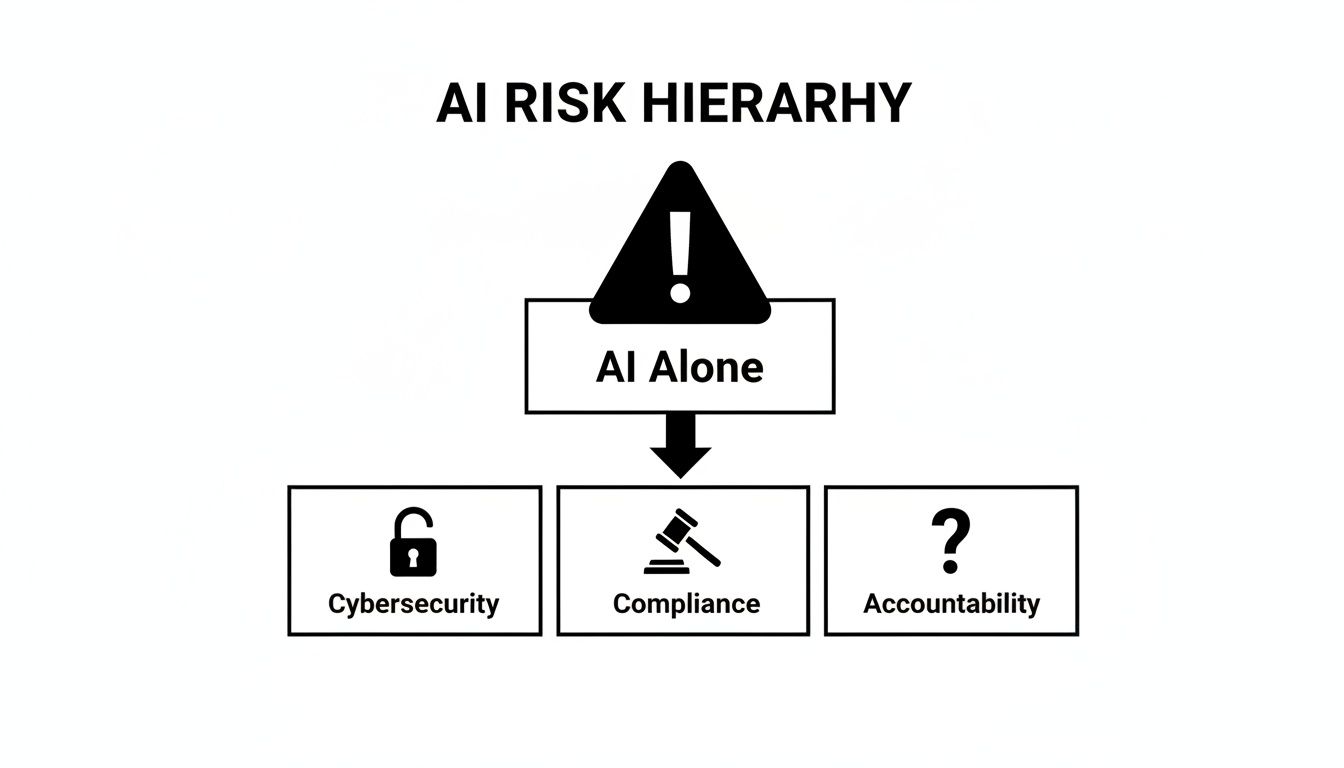
As you can see, letting AI run solo creates major weaknesses in cybersecurity, compliance, and accountability. You need a human in the driver's seat.
Human Intuition In Cybersecurity
Cybersecurity is one of the clearest examples of where AI is a helper, not a manager. An AI can be trained to flag suspicious activity based on known patterns, and it’s great for that first alert.
But it lacks the intuition needed to investigate properly. An experienced IT professional can analyze a potential threat within the unique context of your business. They ask the right questions, communicate with your team during a crisis, and make the strategic call on how to stop a threat without shutting down your entire operation.
Strategic Infrastructure and Recovery
Beyond security, AI just isn't built to manage the physical and strategic sides of your technology. It can monitor network performance, but it can’t design a scalable network that will support your business as it grows. It can’t diagnose a failing hard drive, replace it, and restore your critical data from a backup.
This is where the idea that AI helps—it doesn’t manage it becomes crystal clear. An AI is a powerful assistant, but it’s not the engineer, the strategist, or the hands-on technician.
What this actually means is that AI is a tool, not a strategy. It can draft an email, but it can’t defend your network, respond to threats, or align tech with your business goals.
The table below breaks this down even further, showing where AI shines as a helper and where human oversight is a must.
AI Helper vs Human Manager
| Business Function | How AI Can Help | Why Human Management is Essential |
|---|---|---|
| Cybersecurity | Flags odd activity, filters spam, and detects known malware. | Investigates complex threats, makes strategic response decisions, and manages crisis communication. |
| Data Backup | Automates scheduled backups and monitors for errors. | Designs a strong backup strategy, tests restores, and manages recovery during a real disaster. |
| IT Infrastructure | Monitors server uptime and network performance. | Designs networks that can grow, performs hardware upgrades, and provides hands-on maintenance. |
| Compliance & Governance | Scans documents for keywords and identifies potential policy violations. | Understands complex regulations, makes risk assessments, and ensures the business meets legal standards. |
| Vendor Management | Gathers pricing data and compares service agreements. | Negotiates contracts, builds relationships, and holds vendors accountable. |
This comparison makes it obvious: AI handles repetitive tasks, while humans handle the strategy, accountability, and critical thinking.
Interestingly, new data shows AI is a powerful team enhancer. A recent U.S. Chamber of Commerce report found that nearly 60% of small businesses now use AI. Even more telling, 82% of those businesses actually expanded their workforce over the past year. You can read the full research about these small business trends to see how growth and AI go hand-in-hand.
For these essential functions—from hands-on server maintenance to creating a solid plan for data backup and disaster recovery—you need a reliable IT partner. These are the areas where human experience isn't just a benefit; it's absolutely necessary.
How to Blend AI with Professional IT Management
So, how do you actually make this work for your business? The smartest strategy isn’t about choosing AI or professional IT support; it’s about blending them together.
This hybrid approach lets you use AI's efficiency for certain tasks while keeping human experts in control of the strategy, security, and big-picture decisions that keep your business safe. It’s how you get enterprise-level power at a cost that makes sense for a small business in Seaside or anywhere else in our community.
Here’s a simple framework to make it happen.
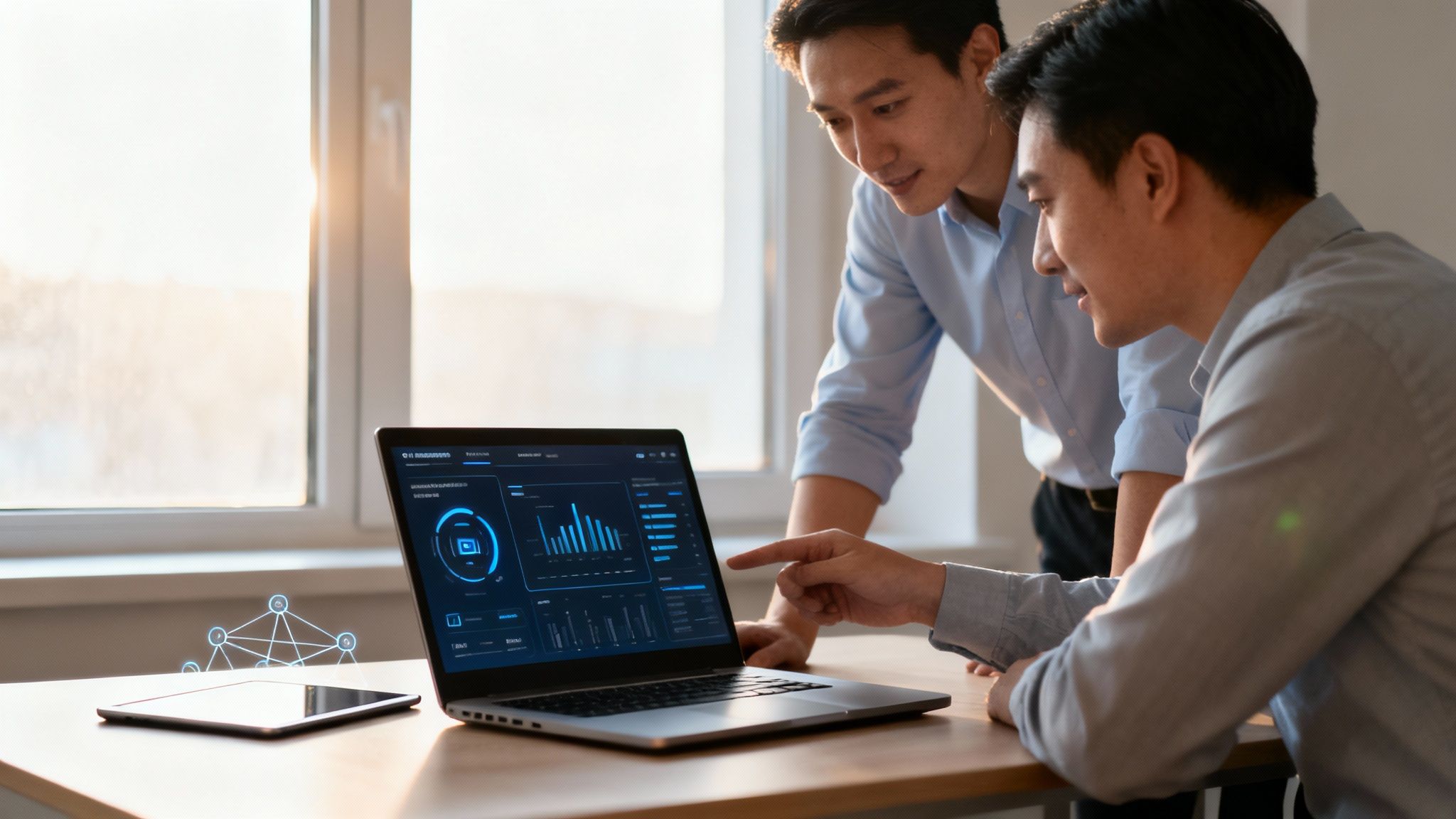
A Practical Framework for Blending AI and IT
First, start by using AI for quick wins in low-risk areas. Think of it as a super-powered assistant for tasks like drafting marketing ideas, summarizing long reports, or spotting trends in customer feedback. These are perfect jobs to offload.
Second, and this is crucial, roll out these tools only under the watch of your IT partner. They are the ones who will check these tools for security, ensure they meet compliance standards like HIPAA or PCI-DSS, and integrate them properly so you don’t accidentally create new security holes. This step is non-negotiable.
Finally, lean on your managed IT provider for the heavy lifting. This means cybersecurity defense, bulletproof data backups, compliance management, and strategic tech planning. These are the areas where AI helps—it doesn’t manage it. You absolutely need human accountability. For a deeper dive into this partnership model, check out our guide to co-managed IT services.
The Adaptive Model in Action
At Adaptive, we live this blended model every day. We use advanced AI tools for proactive network monitoring and threat detection, which helps us spot trouble faster than a human ever could alone. But it’s our experienced engineers who analyze those alerts, make the critical judgment calls, and provide the hands-on response that keeps your business protected.
This hybrid approach gives you the best of both worlds: AI's speed and efficiency paired with the irreplaceable strategic guidance of human experts. It's how we deliver enterprise-level results at a price that works for local SMBs.
This balanced view is quickly becoming the new standard. A recent Goldman Sachs survey found that 81% of business owners see AI as a key driver for growth, and 81% also confirmed it improves their workforce rather than replacing it.
But here’s the key part: the same survey revealed that 45% feel they lack the technical know-how to implement AI securely. That highlights the exact gap a trusted IT partner is meant to fill. Discover more insights about these small business growth plans on goldmansachs.com.
By pairing AI’s capability with professional IT management, you build a powerful, secure, and smart technology foundation for your business.
Use AI to boost productivity—but pair it with professional IT support. Adaptive blends AI-driven insights with hands-on, secure infrastructure management so nothing falls through the cracks.
Ready to Build a Smarter Tech Strategy?
You’ve now got a clear roadmap for how AI can—and can’t—fit into your business here in Salinas. The big takeaway is simple: AI is a powerful tool, but it's not the one managing your business.
The path to secure, sustainable growth isn’t about choosing between AI and human experts. It’s about blending them intelligently. Let AI make your team more productive, but rely on a dedicated IT partner to keep your business secure and strategically aligned.
Don’t let the hype around AI lead you down a risky path of DIY tech management. The smartest strategy is to use AI to boost productivity while pairing it with professional IT support so nothing ever falls through the cracks.
Let’s talk about where AI fits—and where it doesn’t. Book a free tech consult to explore your options.
Adaptive Information Systems
380 Main St, Salinas CA 93901 | 831-644-0300 | hello@adaptiveis.net